Metabolic syndrome and risk of suicide death in South Korea: a nationwide cohort study
Article information

Abstract
Background/Aims
South Korea has one of the highest suicide rates worldwide. This study examined the association between metabolic syndrome (MetS) and suicide death using nationwide data.
Methods
The study used the National Health Insurance Service database in South Korea. A total of 3,951,398 individuals were followed for up to 11 years. The risk of suicide death was analyzed in those with and without MetS and its components. Kaplan–Meier analysis was conducted to assess the incidence of suicide death, and Cox proportional hazards regression was used to calculate adjusted hazard ratios (HRs) and 95% confidence intervals (CIs).
Results
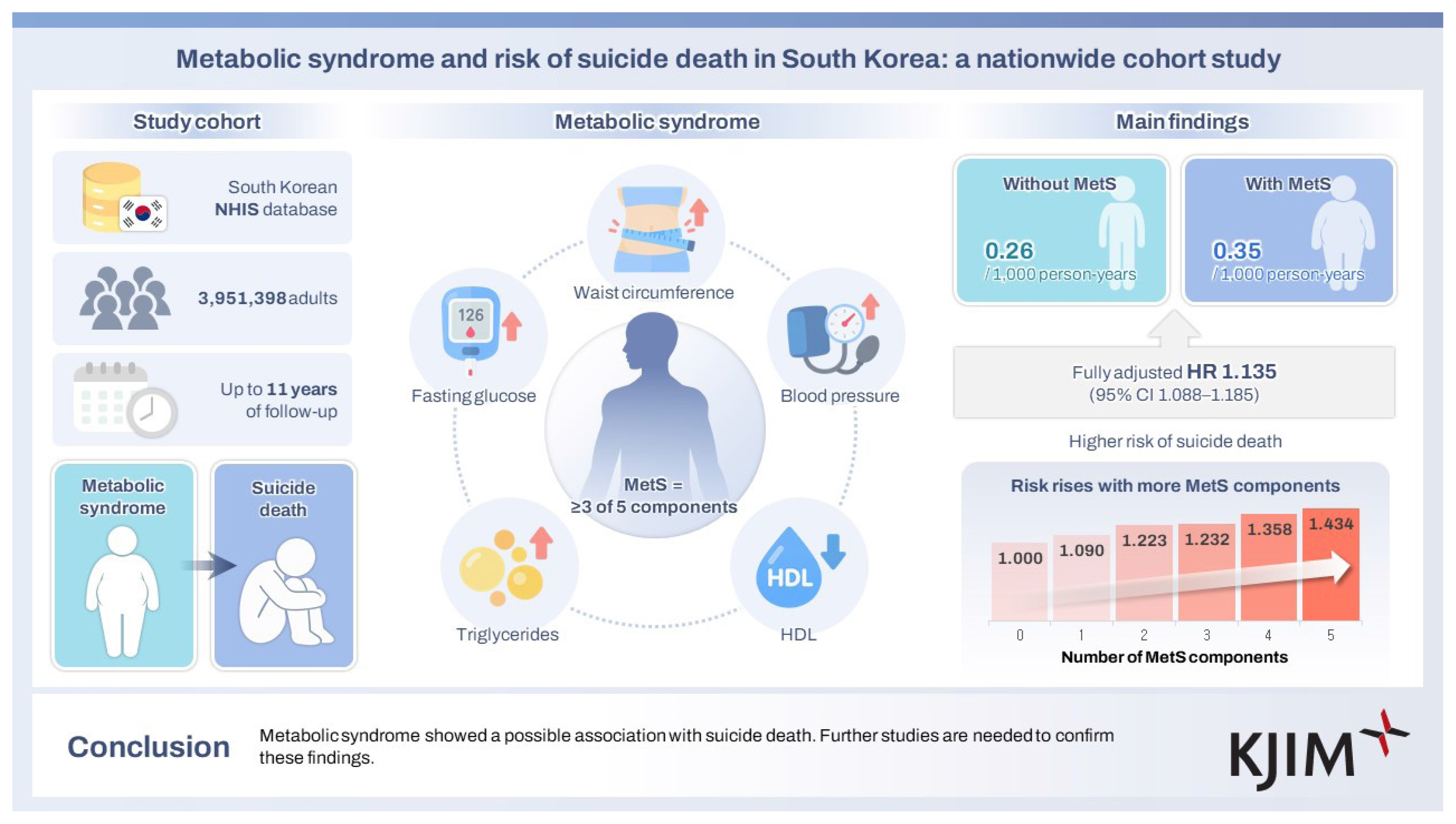
During 10,657,552.48 person-years, the incidence of suicide death was higher in individuals with MetS than in those without MetS (0.35 vs. 0.26 per 1,000 person-years). In adjusted analyses, MetS was associated with suicide death (HR: 1.135; 95% CI: 1.088–1.185). Compared with individuals without any metabolic components, those with one to five components showed HRs of 1.09 (1.032–1.151), 1.223 (1.155–1.295), 1.232 (1.154–1.314), 1.358 (1.258–1.466), and 1.434 (1.277–1.609), respectively.
Conclusions
MetS showed a possible association with suicide death. Further studies are needed to confirm these findings.
INTRODUCTION
Suicide is a major public health issue and a leading cause of death worldwide. Globally, 703,000 people die by suicide each year, accounting for 1.3% of all deaths, and reducing suicide mortality has been identified as a global priority by the World Health Organization [1]. Among the member countries of the Organization for Economic Co-operation and Development, South Korea has had one of the highest suicide rates since 2003 [2]. The burden of suicide continues to increase, and identifying clinical factors associated with suicide risk may help in the early detection of high-risk individuals.
Metabolic syndrome (MetS) is a cluster of metabolic abnormalities, including impaired glucose metabolism, abdominal obesity, atherogenic dyslipidemia, and elevated blood pressure (BP) [3]. Its prevalence has increased worldwide [4,5], and in Korea, the age-adjusted prevalence rose from 27.1% in 2001 to 33.2% in 2020 [6].
MetS and its components are associated with psychological distress [7], depressive symptoms [8–10], psychological characteristics (e.g., hostility and anger) [11], and adverse personality traits [12]. Given that psychiatric disorders are major risk factors for suicide [13], it is clinically relevant to examine whether MetS is associated with suicide risk. However, few studies have evaluated the relationship between MetS and suicide mortality [14]. A previous study reported an association between elevated BP and suicide death but not with MetS overall [14]. In addition, most prior studies have focused on suicidal ideation rather than suicide mortality [15–17].
Based on this gap, we conducted a nationwide population-based study to examine the association between MetS and suicide death.
METHODS
Data
We used health insurance claims data and health examination results from the National Health Insurance Service (NHIS) of South Korea. Nearly all Koreans (97.2% of the population) are covered by the NHIS, which is a non-profit, single-payer organization by the Korean government [18]. The NHIS supports annual or biennial health checkups for all insured Koreans aged > 40 years and employees aged > 20 years. Therefore, the NHIS database contains a complete set of health information pertaining to almost the entire South Korean population, including sociodemographic information, anthropometric measurements, blood tests, completed questionnaires on lifestyle behaviors, claims for diseases (all diagnostic codes in the International Classification of Diseases, ICD-10), and treatment information.
Study cohort
The population for this study consisted of 40% randomly sampled individuals who completed health examinations from January 1 to December 31, 2009, among all Korean NHIS beneficiaries. According to the regulations of the Korean National Health Insurance Sharing Services, which limits total sample numbers and data sizes, we could only obtain a 40% simple random sampling database of the subjects who underwent a health screening examination in 2009. The index year was set at 2009, and 4,234,415 adults (aged ≥ 20 years) were initially identified. Individuals with missing data for baseline characteristics and covariates were excluded from the analysis (n = 272,763). We also excluded deaths occurring within one year from baseline (lag period) (n = 10,254). The final analytic cohort included 3,951,398 adults. A flowchart of the study population sampling is shown in Supplementary Figure 1.
This study was approved by the Chosun University Hospital Institutional Review Board (No. CHOSUN 202308030).
Exposure
The health screening examinations that the subjects underwent as NHIS beneficiaries included the measurement of body weight and height using an electronic scale, and waist circumference (WC) at the middle point between the rib cage and iliac crest by trained examiners. All blood samples were collected after fasting, and BP was measured using a sphygmomanometer after 5 minutes of rest. Additional details are provided in the Methods section in the Supplementary Appendix. Using the NHIS data, we defined the presence of the following medical conditions using claims data under their respective ICD-10 codes and medication prescriptions, where applicable: type 2 diabetes, ICD-10 codes E11–14 and prescription for antidiabetic medication; hypertension, ICD-10 codes I10, I11, I12, I13, and I15 and prescription for antihypertensive medication; dyslipidemia, ICD-10 code E78 and prescription of dyslipidemia agents; depression, ICD-10 codes F32 and F33. As for chronic kidney disease (CKD), we referred to the estimated glomerular filtration rate in the data, with a threshold of < 60 mL/ min/1.73 m2 using the Modification of Diet in Renal Disease Study equation. We defined MetS using the harmonized International Diabetes Federation criteria and adopted the Korean-specific WC cutoff for abdominal obesity [19,20]. Individuals with at least three of the following five components were diagnosed with MetS: WC of ≥ 85 cm in women or ≥ 90 cm in men, fasting plasma glucose (FPG) of ≥ 100 mg/dL or drug treatment for type 2 diabetes, BP of ≥ 130/85 mm Hg or drug treatment for hypertension, serum high-density lipoprotein cholesterol (HDL) of < 50 mg/dL in women or < 40 mg/dL in men or drug treatment for dyslipidemia, and serum triglyceride (TG) of ≥ 150 mg/dL or drug treatment for dyslipidemia.
Outcomes and follow-up
The primary outcome was death by suicide, defined as ICD-10 codes X60–X84 as recorded by the Korea National Statistical Office. The study population was followed from baseline to the date of death, or until December 31, 2021, whichever came first.
Statistical analyses
We obtained mean ± standard deviation for the continuous variables and numbers and percentages for the categorical variables. We performed group comparisons using student’s t-test or one-way analysis of variance for continuous variables and chi-squared tests for categorical variables. We calculated incidence rates by dividing the number of events by 1,000 person-years. Kaplan–Meier curves were used to estimate the cumulative incidence of suicide death, and differences between groups were assessed using the log-rank test. Cox proportional hazards models were used to estimate hazard ratios (HRs) and 95% confidence intervals (CIs). Model 1 was unadjusted. Model 2 was adjusted for age, sex, income, smoking status, alcohol consumption, and regular exercise. Model 3 further included depression. Model 4 additionally included body mass index (BMI) to account for general adiposity. Subgroup analyses were performed according to age, sex, and depression status, and interactions were tested. Additional analyses were conducted according to the number and combinations of MetS components. Statistical analyses were performed using SAS version 9.4 (SAS Institute, Cary, NC, USA), and a two-sided p value < 0.05 was considered statistically significant.
RESULTS
Characteristics of the study sample
Table 1 presents the basic characteristics of the subjects according to the presence of MetS. Individuals with MetS, compared with those without MetS, were more likely to be older, male, and have a smoking status, while also less likely to have an alcohol drinking status and exercise more. Individuals with MetS had also higher values for BMI, WC, total cholesterol, low-density lipoprotein (LDL), TG, BP, and FPG, as well as lower HDL, compared with individuals without MetS. Obesity, diabetes, hypertension, dyslipidemia, CKD, and depression were more common in individuals with MetS.

Characteristics of the subjects
The baseline characteristics according to number of MetS components are shown in Supplementary Table 1. Subjects with an increasing number of MetS components were significantly more likely to be male and older, less likely to be smokers, less likely to be drinkers, less likely to exercise more, and had a higher prevalence of obesity, diabetes, hypertension, dyslipidemia, CKD, and depression.
Suicide death risk according to the presence of MetS
As shown in Table 2, during 10,657,552.48 person-years of follow-up, the incidence rate of suicide death was higher in participants with MetS at baseline than in those without MetS (0.35 vs. 0.26 per 1,000 person-years). In Cox proportional hazards models, MetS at baseline was associated with suicide death in the unadjusted model (Model 1: HR, 1.347; 95% CI, 1.296–1.400). After adjustment for age, sex, income, smoking status, alcohol consumption, and regular exercise (Model 2), the HR was 0.978 (95% CI, 0.940–1.017). Additional adjustment for depression (Model 3) yielded an HR of 0.959 (95% CI, 0.922–0.998). In the fully adjusted model (Model 4, including BMI), MetS was significantly associated with suicide death (HR, 1.135; 95% CI, 1.088–1.185).

Hazard ratios (95% confidence interval) for suicide death according to presence of metabolic syndrome (MetS) and its components
Figure 1A shows the cumulative incidence of suicide death according to MetS status, with a higher incidence observed in individuals with MetS.
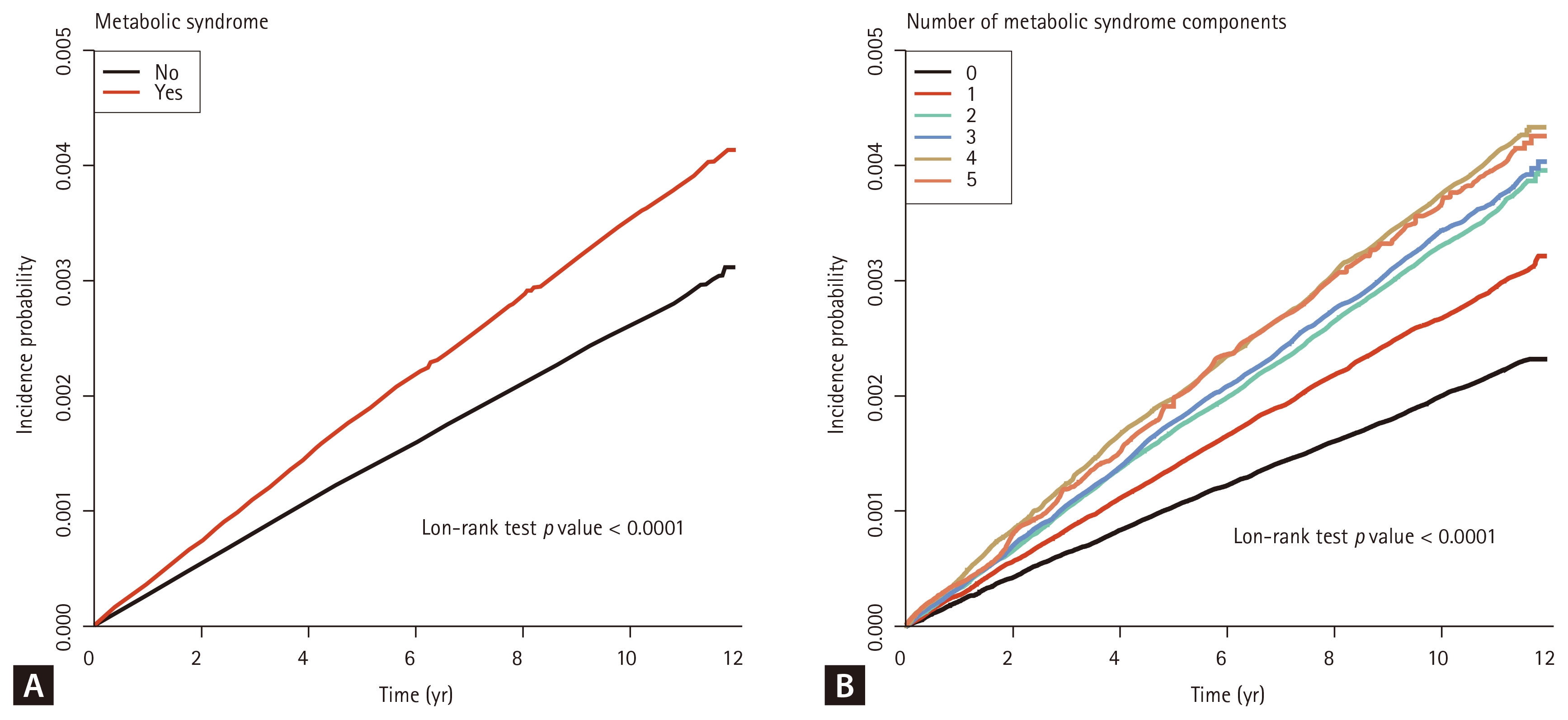
Kaplan–Meier curve for cumulative incidence probability of suicide death according to presence of metabolic syndrome (A) and number of metabolic syndrome components (B). Figure 1A shows the significantly increased cumulative risk for suicide death in the presence of metabolic syndrome compared with the case without metabolic syndrome. Figure 1B shows the graded cumulative increased risk of suicide death according to a number of metabolic syndrome components.
Suicide death risk according to MetS components
Table 2 shows the risk of suicide death according to each MetS component. The column for model 4 gives the multivariable-adjusted HRs of suicide death for elevated FPG, elevated TG, elevated BP, and greater WC at baseline compared with those without MetS. Meanwhile, we found no significant association between low HDL levels and suicide death. Supplementary Figure 2 shows that each MetS component revealed a significant cumulative increased suicide death risk compared with those without each MetS component.
The sum of MetS components showed a positive association with a higher risk of suicide death. Compared with individuals without any metabolic component, those with one, two, three, four, or five metabolic components at baseline had a significantly higher risk of suicide death (model 4 in Table 2), with confounding factors fully adjusted. Figure 1B shows the graded cumulative increased risk of suicide death according to a number of MetS components.
Subgroup analysis
Subgroup analyses were performed according to age, sex, and depression status, and p values for interaction were assessed (Fig. 2, Supplementary Table 2). The association between MetS and suicide death was similar across age, sex, and depression status.
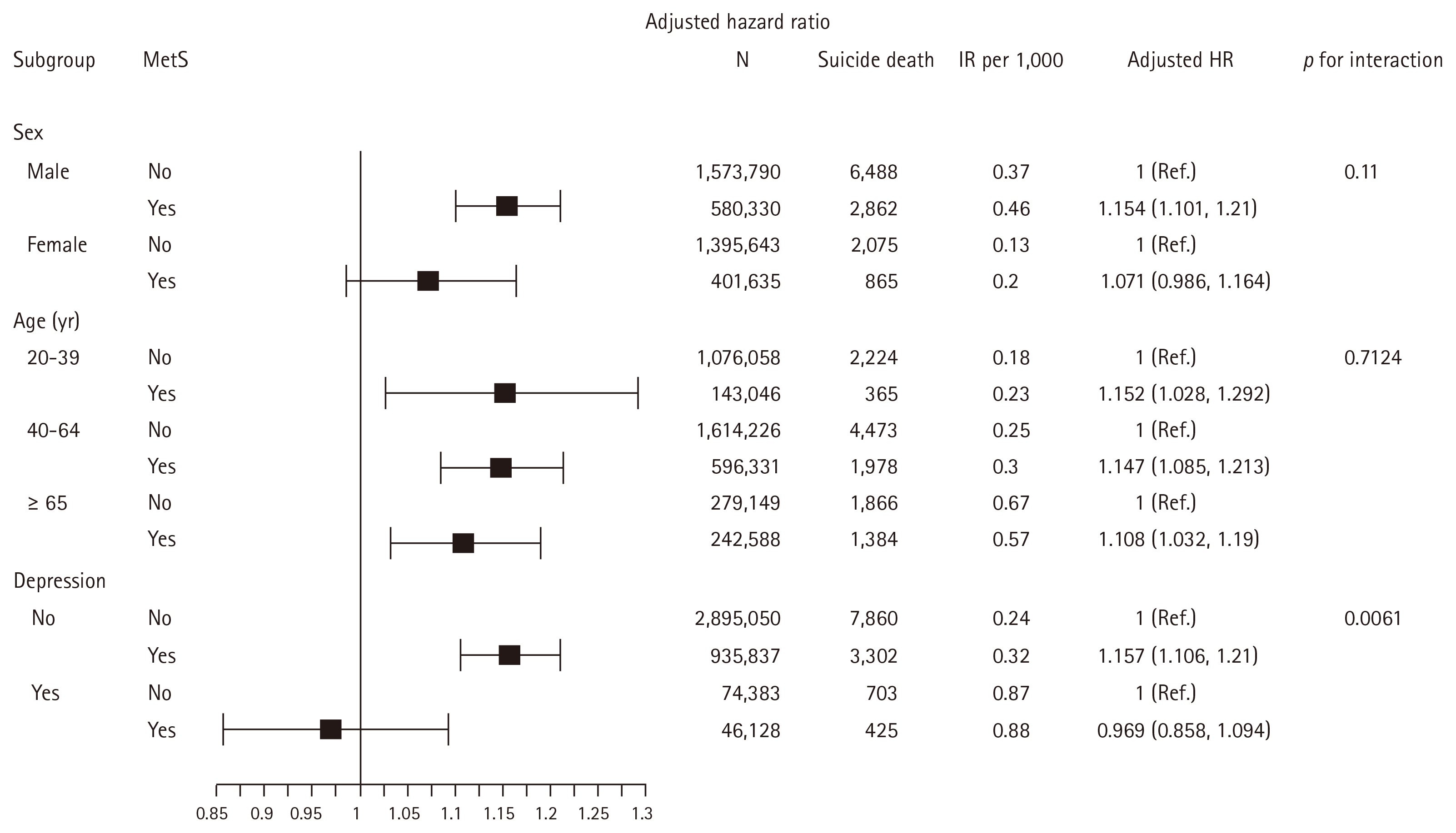
Hazard ratios (HRs) (95% confidence interval) for suicide death according to metabolic syndrome (MetS) in different subgroups. IR, incidence rate.
In analyses of individual MetS components, no significant interactions were observed for WC, HDL, or TG. For FPG, a significant interaction with age was identified, while the pattern was similar across subgroups. For BP, interactions with sex and depression were observed, while the pattern was similar across subgroups (Supplementary Table 2, Supplementary Fig. 3).
In analyses according to the number of MetS components, a significant interaction with sex was observed, while the pattern was similar across subgroups. No significant interactions were found for age or depression (Fig. 3A, Supplementary Table 3).
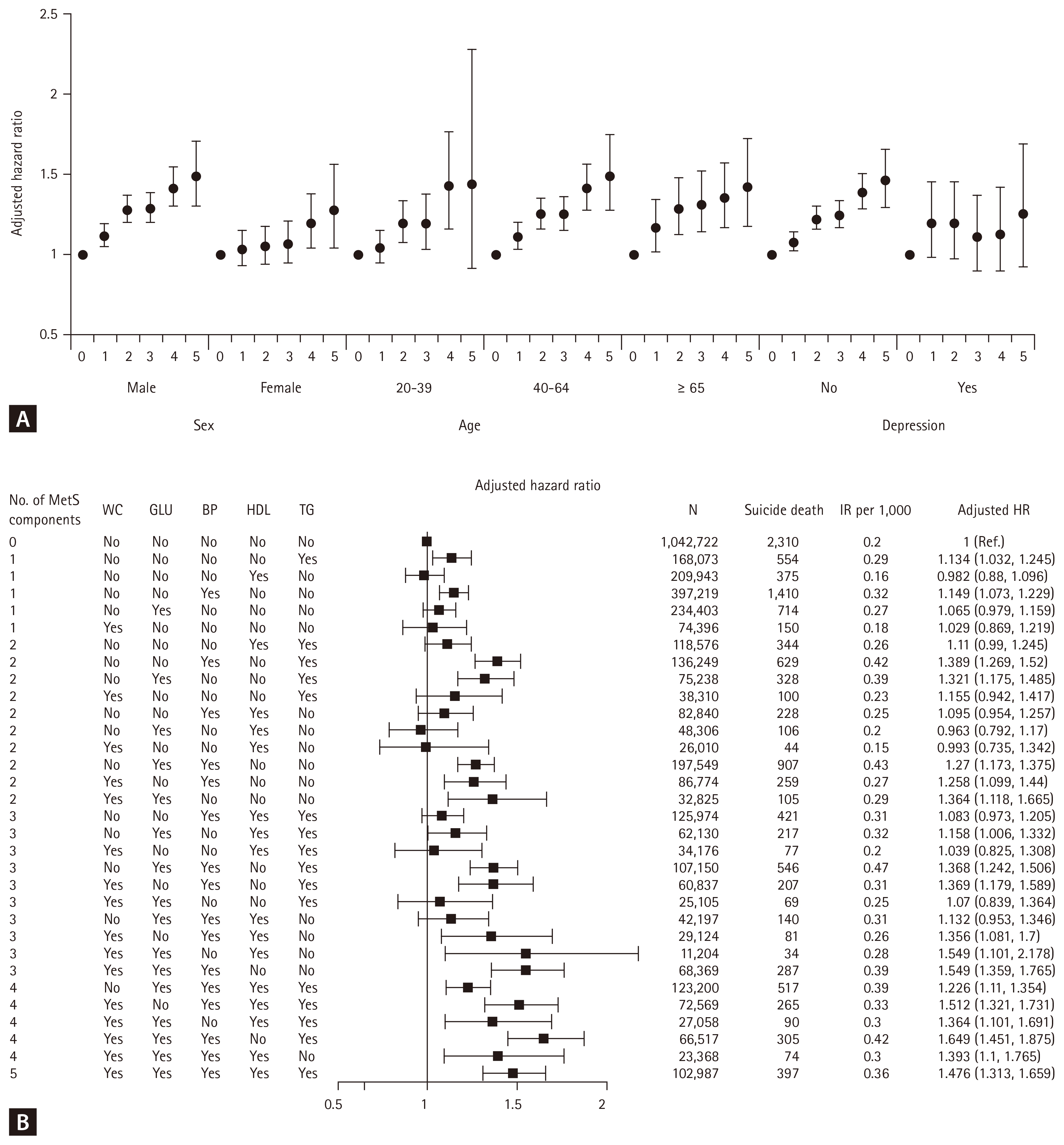
Stratified analysis according to possible combinations of metabolic syndrome components within the same number of metabolic syndrome components (A) and hazard ratios (HRs) (95% confidence interval) for suicide death according to number of metabolic syndrome components in different subgroups (B). WC, waist circumference; GLU, fasting plasma glucose; BP, blood pressure; HDL, high-density lipoprotein cholesterol; TG, triglyceride; IR, incidence rate.
Additional analyses were conducted according to combinations of MetS components within the same number of components (Fig. 3B, Table 3). Overall, the analysis results were consistent with the main results.

Stratified analysis according to possible combinations of MetS components within the same number of MetS components
DISCUSSION
To our knowledge, this investigation is the first large-scale study to show the association of MetS with death by suicide as an outcome. In this nationwide population-based study of more than 3.9 million adults covering a period of 11 years, we found an association between MetS and suicide death compared with those without MetS at baseline. The risk of suicide death appeared to increase in a graded manner with the number of MetS components.
We could not determine the mechanisms that connect MetS and increasing risk of suicide mortality. Rather than having a single cause, suicide is a result of the complex interaction of many factors that occur throughout the individual’s life course [21]. Although many risk factors have been identified, they do not fully explain why individuals progress to suicide [22]. The same risk factor might have a different effect according to when it occurs in someone’s life [21].
Our findings suggest that metabolic factors may be related to suicide risk over time. Kim et al. [15] reported that MetS is associated with suicidal ideation. Ko et al. [17] revealed that elevated TG and elevated FPG are associated with suicidal ideation, but not with the presence of MetS. These studies evaluated limited suicidal ideation as an outcome. Suicidal ideation represents an important stage, but not all individuals who experience such thoughts proceed to suicide death, suggesting that additional processes influence this transition [21]. To date, only one large population-based report has examined MetS in relation to suicide mortality. Chang et al. [14] reported that suicide mortality is not associated with MetS but associated with elevated BP in a Taiwanese population. However, their study lacked consideration of confounders, such as health behaviors or characteristics. In our study, we adjusted for a range of possible confounders and observed an association between MetS and suicide death.
MetS is a clustering of interrelated metabolic risk factors and associated with an increased risk of cardiovascular diseases, type 2 diabetes, and all-cause mortality [23,24]. Individuals with MetS may experience a cumulative burden of chronic illness and ongoing medical care [20], and the accumulation of physical illness has been associated with suicidal behavior [25–27]. The graded increase in suicide death observed with a greater number of MetS components may reflect the overall burden of metabolic dysregulation. Awareness of serious complications related to metabolic disorders may be associated with perceptions of illness burden or self-rated health, which has been suggested as a potential mediator between metabolic factors and suicidal ideation [28,29]. In our study, the association between MetS and suicide death was generally similar across age groups, including both younger and older individuals, with no significant interaction by age. These findings suggest that the relationship may be present across the adult lifespan. Further studies are needed.
Although the role of MetS in the pathobiology of suicide remains unclear, studies have reported reduced central serotonergic activity in individuals with MetS [30], and serotonergic dysfunction has been implicated in people with suicidal ideation [31]. Increased blood levels of fatty acids might raise levels of circulating tryptophan, which may, in turn, affect brain serotonin function [32].
Obesity stigma may also be relevant. Individuals with obesity commonly experience persistent social stigma and may be less likely to receive adequate care [33]. In this context, BMI was included to account for general adiposity. Given its close relationship with other metabolic components, including WC, the possibility of overadjustment or collinearity cannot be excluded. These findings warrant cautious interpretation.
This study has several strengths. First, it is a large-scale, nationally representative cohort study. Second, the use of nationwide registers with individual-level data allowed the investigation of a relatively rare outcome, such as suicide death. We examined suicide death as the primary outcome, rather than suicidality, including suicidal ideation, as in prior studies. In addition, the classification of suicide by the Korea National Statistical Office is considered reliable. These features support the interpretation of the observed association between MetS and suicide death based on real-world data. This study has several limitations. First, suicide death is a multifactorial outcome influenced by psychiatric, psychosocial, and socioeconomic factors [34]. Although depression was included as a covariate, other established risk factors—such as prior suicide attempts, personality traits, substance use severity, chronic pain, marital status, and major life stressors—were not available in this dataset. In addition, depression was defined using claims data, and undiagnosed or subclinical cases could not be assessed, which may have resulted in residual confounding. Second, reverse causation cannot be excluded. Subclinical psychiatric vulnerability may precede behavioral changes contributing to MetS and represent a shared antecedent of both MetS and suicide death. Although the longitudinal design establishes temporal sequencing, this possibility remains. Third, the study population was derived from individuals who participated in the national health screening program. Participation may be higher among economically active individuals, and socially marginalized populations may be underrepresented, which may result in selection bias. The program, however, covers a large proportion of the Korean population. Fourth, information on the progression of MetS-related conditions, non-lethal suicidal behavior, and family history of suicide was not available. In addition, detailed information on other chronic conditions, such as cancer or heart failure, was not fully accounted for in the analysis. Fifth, generalizability may be limited, as the study was conducted in a South Korean population. Replication in other populations is needed. Lastly, suicide is influenced by cultural, lifestyle, and substance use factors, which were not captured in the NHIS database.
In this nationwide population-based cohort study, MetS showed a possible association with suicide mortality. Further studies are needed to confirm this association.
KEY MESSAGE
1. Metabolic syndrome (MetS) is associated with psychological distress and mood disorders, which may be related to suicide risk.
2. In South Korea, MetS showed a possible association with suicide mortality over 11 years of follow-up, with a graded pattern according to the number of MetS components.
3. These findings suggest a potential link between metabolic health and suicide risk.
Notes
CRedit authorship contributions
Jin Hwa Kim: conceptualization, methodology, validation, writing - original draft, writing - review & editing, visualization; Young Sang Lyu: conceptualization, writing - review & editing; Mee Kyoung Kim: conceptualization, writing - review & editing; Sang Yong Kim: conceptualization, writing - review & editing; Ki-Hyun Baek: conceptualization, writing - review & editing; Ki-Ho Song: conceptualization, writing - review & editing; Kyungdo Han: conceptualization, methodology, resources, investigation, data curation, formal analysis, validation, software, writing - review & editing; Hyuk-Sang Kwon: conceptualization, methodology, resources, validation, writing - review & editing, visualization, supervision, project administration, funding acquisition
Conflicts of interest
The authors disclose no conflicts.
Funding
This work was supported by the National Research Foundation of Korea (NRF) grant funded by the Korea government (MSIT) (2021R1A2C2013890).