


INTRODUCTION
The coronavirus disease 2019 (COVID-19) pandemic, caused by severe acute respiratory syndrome coronavirus 2 (SARS-CoV-2), has posed unprecedented challenges to global health systems [1,2]. Beyond its acute respiratory manifestations, COVID-19 has revealed complex immunological interactions with pre-existing conditions, including autoimmune diseases [3]. Autoimmune diseases, characterized by immune-mediated tissue damage and loss of self-tolerance [4], are increasingly recognized as important comorbidities in COVID-19 [5]. Notably, autoimmune diseases and COVID-19 share several key immunological features, including dysregulated cytokine production, lymphocyte dysfunction, and impaired regulatory immune control [6,7]. An immune phenotyping study suggests that long COVID is associated with persistent alterations in both innate and adaptive immune compartments, accompanied by broadly enhanced humoral responses [8]. In severe cases requiring intensive care, patients exhibit a profoundly altered immune profile characterized by sustained lymphopenia, expansion of granulocytes and plasmablasts, increased activation and terminal differentiation of T cells and natural killer cells, and markedly elevated SARS-CoV-2-specific antibody responses [9].
The relationship between COVID-19 and autoimmune diseases is increasingly recognized as bidirectional [10]. Individuals with autoimmune diseases are at increased risk of SARS-CoV-2 infection and adverse clinical outcomes [11]. This vulnerability is attributable to their immunocompromised state and is further influenced by the use of immunosuppressive therapies. Corticosteroids, while essential for controlling autoimmune activity, may impair viral clearance and increase the risk of severe COVID-19 outcomes [12]. Conversely, SARS-CoV-2 infection has been implicated in the initiation and exacerbation of autoimmune conditions, potentially through mechanisms such as molecular mimicry and bystander activation [13–15]. Observational studies have also reported an increased risk of incident autoimmune diseases following SARS-CoV-2 vaccination [5,16]. Furthermore, concerns have been raised regarding the safety and immunogenicity of COVID-19 vaccines in patients with autoimmune diseases [17–19].
This narrative review aims to comprehensively examine the immunological relationship between COVID-19 and five major autoimmune diseases: systemic lupus erythematosus (SLE), rheumatoid arthritis (RA), multiple sclerosis (MS), inflammatory bowel disease (IBD), and Guillain–Barré syndrome (GBS). It further evaluates how autoimmune pathophysiology and immunomodulatory treatments influence susceptibility to SARS-CoV-2, and how SARS-CoV-2 infection may contribute to the onset, reactivation, or exacerbation of autoimmune diseases.
BIDIRECTIONAL ASSOCIATION BETWEEN AUTOIMMUNE DISEASES AND COVID-19
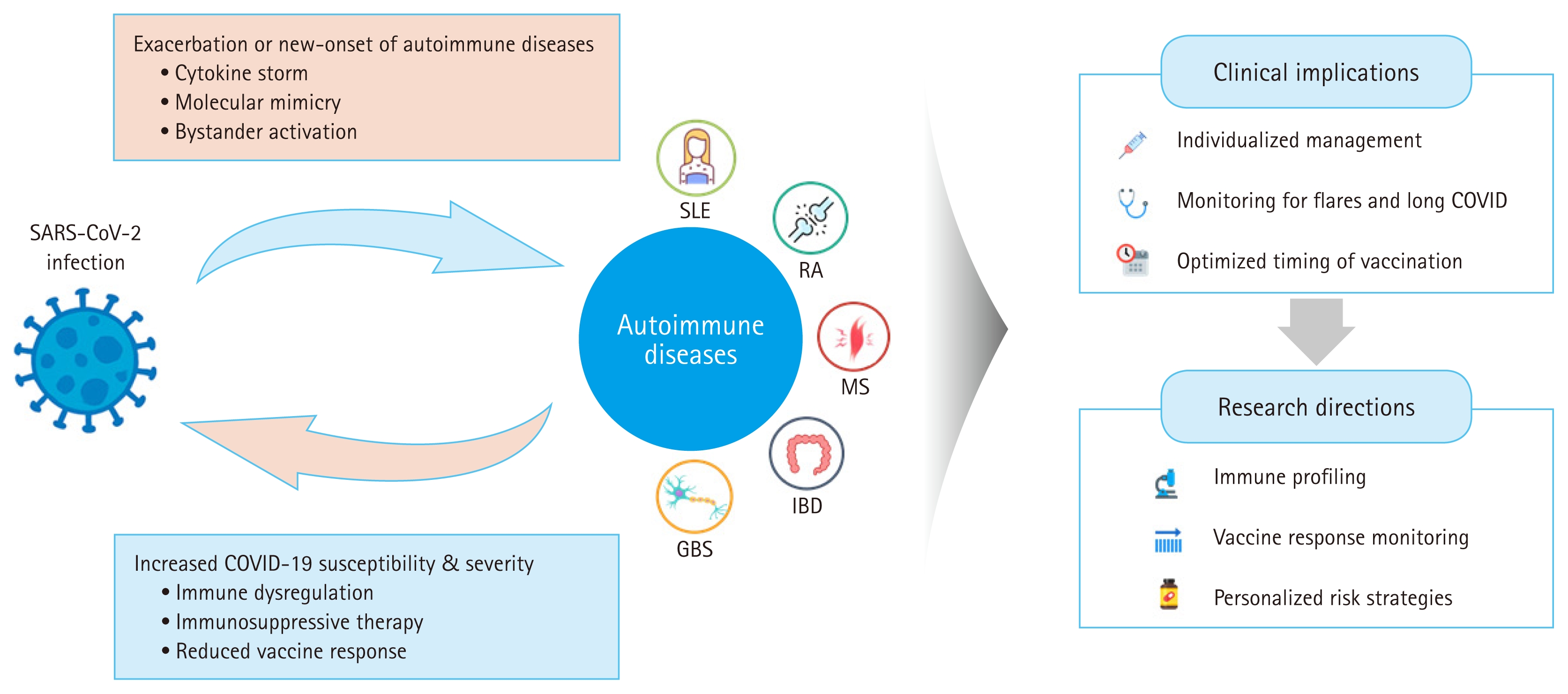
Individuals with autoimmune diseases are at increased risk of severe COVID-19 outcomes due to intrinsic immune dysregulation and the use of immunosuppressive therapies [20]. Autoimmune diseases are characterized by a breakdown in self-tolerance, leading to chronic activation of autoreactive T and B lymphocytes, impaired regulatory T-cell function, and dysregulated cytokine signaling [4]. These alterations weaken antiviral defense mechanisms, resulting in an increased susceptibility to infections, including SARS-CoV-2. Upon the entry of SARS-CoV-2, the innate immune system is rapidly activated, with induction of type I interferons and subsequent release of proinflammatory cytokines such as interleukin (IL)-6, IL-1β, and tumor necrosis factor (TNF)-α [21]. In some cases, however, this response becomes excessive, leading to a cytokine storm, a hyperinflammatory state resembling macrophage activation syndrome, although not necessarily representing a direct exacerbation of autoimmune disease activity [22]. Moreover, SARS-CoV-2 infection has been shown to induce lymphopenia, particularly affecting CD4+ and CD8+ T cells, further compromising immune regulation [23]. The combination of pre-existing immune dysregulation and viral infection—which may disrupt interferon signaling, impair effective T-cell-mediated responses, and delay viral clearance—can increase vulnerability to severe COVID-19 outcomes in individuals with autoimmune diseases [12]. Many of these patients are treated with immunosuppressive agents, including corticosteroids and disease-modifying antirheumatic drugs (DMARDs) [24]. Although essential for disease control, these therapies can further impair host immunity, weakening antiviral defenses. This risk appears particularly elevated in patients receiving high-dose corticosteroids or B cell-depleting agents, such as rituximab [25,26].
Growing evidence suggests that COVID-19 itself may trigger or exacerbate autoimmune diseases [27]. During severe SARS-CoV-2 infection, many individuals develop autoantibodies, including antinuclear antibodies, antiphospholipid antibodies, and anti-type I interferon antibodies [28–30]. Mechanisms such as molecular mimicry, bystander activation, and epitope spreading may underlie these responses, suggesting that SARS-CoV-2 can induce or amplify autoimmunity [31,32]. Notably, 28 human proteins with regions homologous to SARS-CoV-2 peptides have been identified, which may act as potential autoantigens in individuals who develop autoimmune conditions following infection [33]. Through these mechanisms, COVID-19 may initiate or exacerbate pre-existing autoimmune diseases. Consistently, large population-based studies have shown that individuals with COVID-19 have a significantly higher risk of developing a range of autoimmune diseases compared with uninfected individuals [5,27,34].
SARS-CoV-2 vaccination is a key strategy for protecting immunocompromised individuals; however, its effectiveness in patients with autoimmune diseases requires careful consideration [35,36]. Patients receiving immunosuppressive therapies often exhibit reduced antibody responses to COVID-19 vaccines [37]. For example, individuals treated with rituximab or methotrexate may fail to mount adequate neutralizing antibody responses following mRNA vaccination [38,39]. Methotrexate, in particular, has been shown to impair both humoral and cellular immune responses to mRNA-based COVID-19 vaccines [40,41]. Similarly, in previously vaccinated individuals, initiation of rituximab therapy is associated with a progressive decline in anti–SARS-CoV-2 spike antibody titers [42,43]. Janus kinase (JAK) inhibitors may also attenuate vaccine-induced T-cell responses [44]. This reduced immunogenicity is clinically relevant, as it may increase the risk of breakthrough infections and post-acute sequelae of SARS-CoV-2 infection (long COVID) [45]. Clinical outcomes also vary according to the immunosuppressive regimen used; rituximab and JAK inhibitors have been more strongly associated with poor COVID-19 outcomes than other biologic or targeted synthetic DMARDs [46]. Strategies to improve vaccine responses include temporary modification of immunosuppressive therapy; for example, a two-week discontinuation of methotrexate after booster vaccination has been shown to enhance antibody production [47]. Other approaches include optimizing vaccination timing, such as completing primary vaccination before initiating B cell-depleting therapy [48], briefly pausing methotrexate after vaccination [47], and administering booster doses when indicated [49]. Figure 1 illustrates the bidirectional interactions between SARS-CoV-2 infection and autoimmune diseases.
SLE
SLE is a chronic autoimmune disease characterized by inflammation and immune-mediated damage affecting multiple organ systems, including the mucocutaneous, musculoskeletal, hematologic, and renal systems [50]. Approximately 3.4 million individuals worldwide are affected by SLE [51]. SLE has long been associated with viral triggers, and COVID-19 has likewise been shown to influence its clinical course in several ways [5,52,53]. Chang et al. [5] reported that individuals with COVID-19 had a significantly increased risk of developing new-onset SLE (hazard ratio [HR], 2.98). Similarly, a population-based study conducted in Paris, France, found that patients with COVID-19 had a higher risk of SLE flares compared with uninfected individuals (HR, 3.79) [52].
Patients with SLE are also at increased risk of SARS-CoV-2 infection and severe COVID-19 outcomes. Data from the Global Rheumatology Alliance registry identified age, sex, comorbidities, disease activity, and treatment status as key determinants of COVID-19 severity in patients with SLE, with steroid use and treatment interruption particularly associated with worse outcomes [53]. Another study reported that individuals with SLE have higher risks of SARS-CoV-2 infection (0.6–22%), COVID-19-related hospitalization (30%), and mortality (6.5%) compared with individuals without SLE [54].
Despite these associations, a Mendelian randomization study by Yang et al. found no evidence of a direct genetic causal relationship between COVID-19 and SLE [55]. Nevertheless, shared biological mechanisms, such as similar macrophage activation pathways and features of gut microbial dysregulation, have been proposed for both conditions [55]. Regarding vaccination, SARS-CoV-2 vaccines are generally safe in patients with SLE and elicit adequate immune responses, even in the context of immunosuppressive therapy [56–59]. However, certain agents, including mycophenolate, tacrolimus, and belimumab, may reduce antibody responses [58]. Notably, temporary discontinuation of mycophenolate for one week has been associated with improved vaccine immunogenicity (Table 1) [58].
RA
RA is a systemic autoimmune disorder primarily affecting the joints and periarticular soft tissues, characterized by persistent synovial inflammation and progressive joint destruction [60]. Emerging evidence suggests that SARS-CoV-2 infection may trigger the onset of RA [5,61,62]. A case series described five patients who developed inflammatory arthritis resembling RA within weeks of acute SARS-CoV-2 infection [61]. Population-based studies have also reported an increase in RA incidence following SARS-CoV-2 infection [62]. Chang et al. [5] further demonstrated that individuals infected with SARS-CoV-2 had a significantly increased risk of developing RA (HR, 2.98).
Conversely, individuals with pre-existing RA are at increased risk of adverse COVID-19 outcomes. A USA cohort study reported higher risks of hospitalization (relative risk [RR], 1.14) and intensive care unit (ICU) admission (RR, 1.32) among individuals with RA infected with SARS-CoV-2 compared with those without RA [63]. Similar findings have been reported in population-based studies from the UK [64,65], the USA [66], and Denmark [67]. This increased vulnerability persists even after vaccination, with vaccinated individuals with RA remaining at higher risk of SARS-CoV-2 infection and COVID-19-related hospitalization than vaccinated individuals without RA [65,67]. However, absolute risks are lower among vaccinated patients with RA than among those who are unvaccinated [67]. Observational studies suggest that COVID-19 vaccination is generally safe in patients with RA and is not associated with a clinically meaningful increase in disease activity [68,69].
The severity of COVID-19 in individuals with RA appears to vary according to the immunomodulatory treatment regimen. Notably, treatment with rituximab has been associated with worse outcomes independent of vaccination status, although these findings are based on a limited number of events [67]. Data from the COVID-19 Global Rheumatology Alliance registry further indicate that the use of rituximab and JAK inhibitors is associated with greater COVID-19 severity compared with the use of TNF inhibitors [46]. Glucocorticoids remain a cornerstone of RA management [60]; however, doses exceeding 10 mg/day of prednisone have been associated with an increased risk of severe COVID-19-related mortality (odds ratio [OR], 1.89) [70]. Taken together, these findings highlight the importance of personalized risk mitigation strategies in patients with RA, particularly those receiving high-risk immunosuppressive regimens.
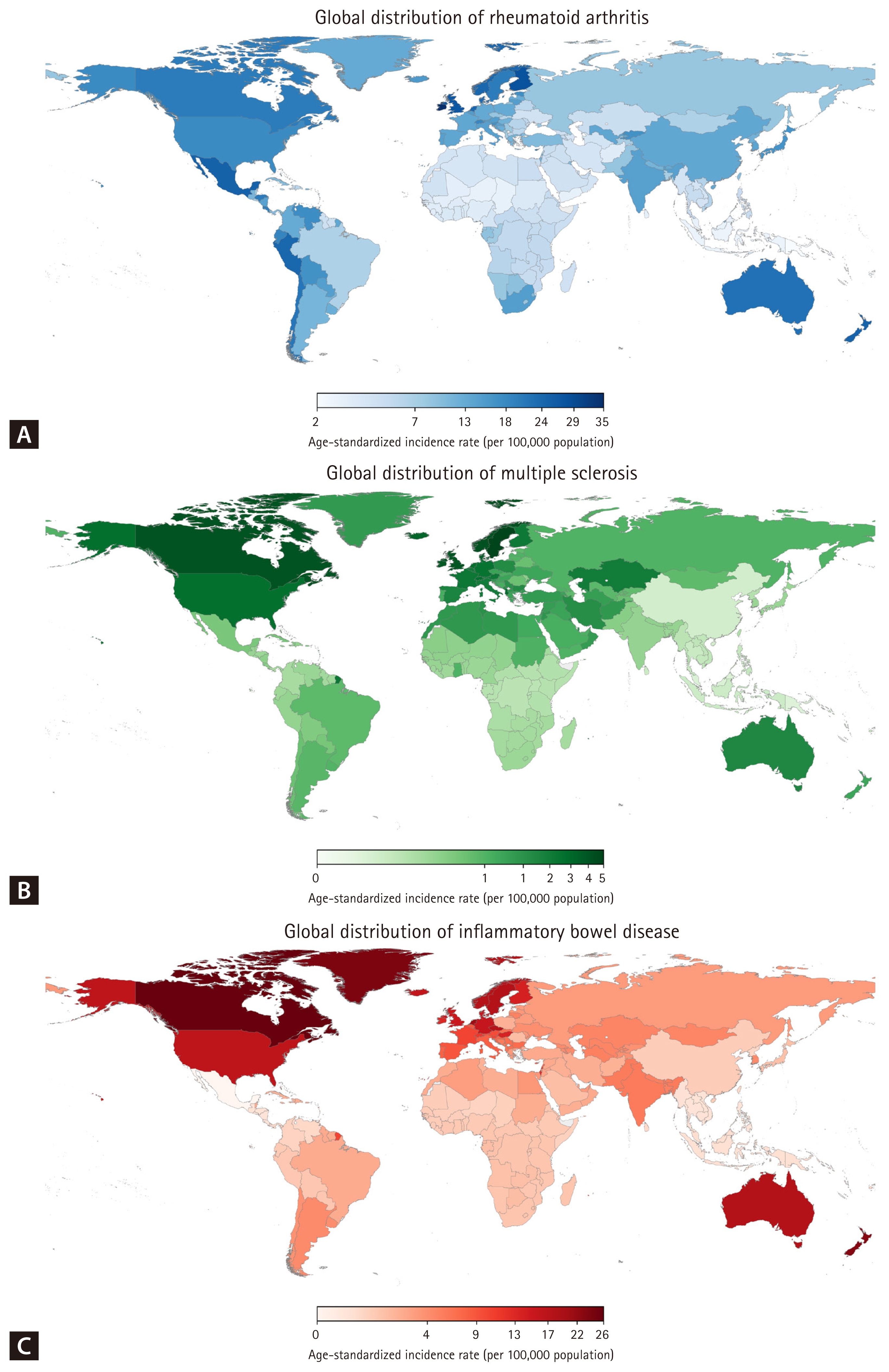
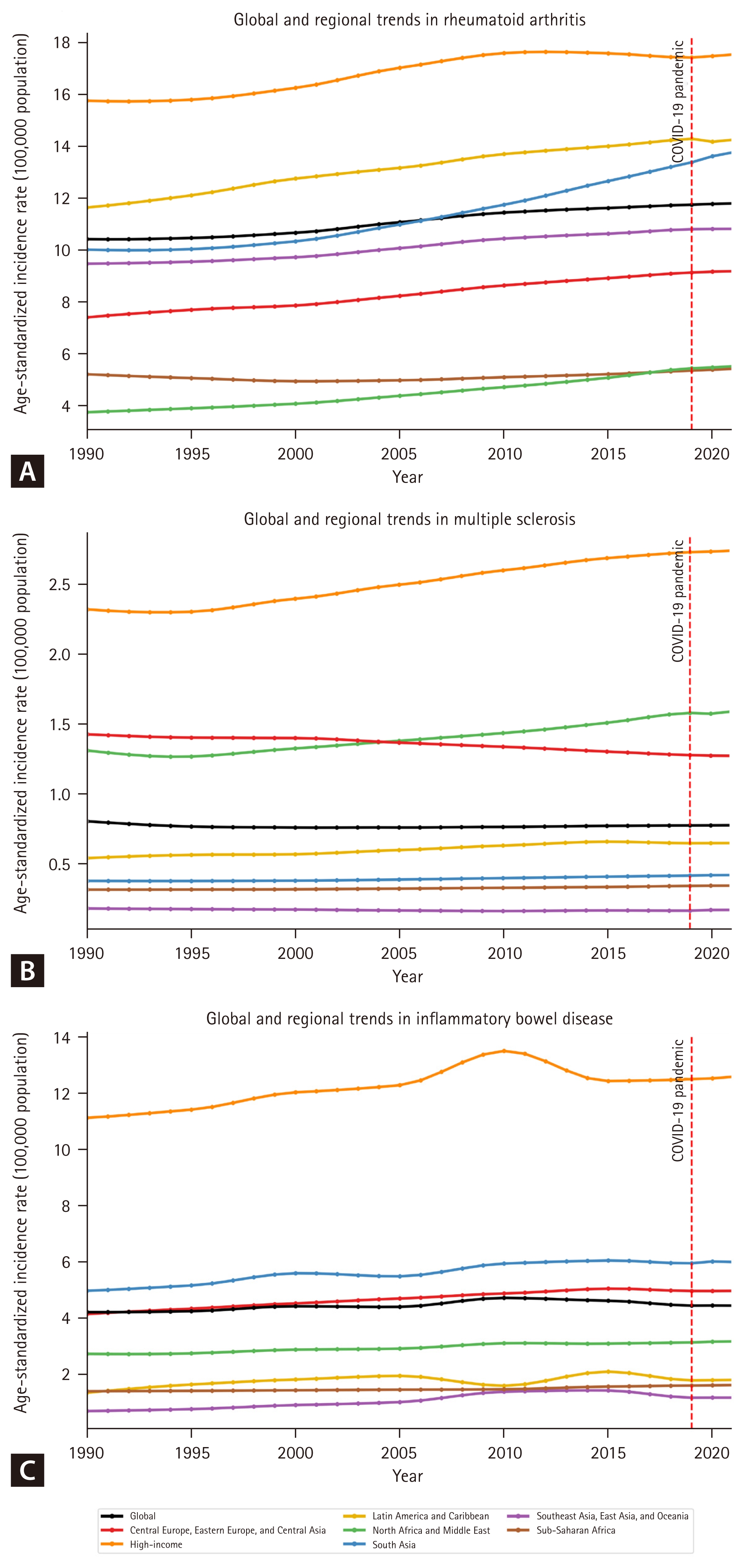
According to meta-regression analyses by the Institute for Health Metrics and Evaluation (IHME), the global age-standardized incidence rate of RA in 2023 was estimated at 11.65 (95% uncertainty interval [UI], 10.56–13.02) per 100,000 population [71–73]. As the comprehensive Global Burden of Disease (GBD) 2023 dataset is not yet fully available, additional details on incidence rates and trends based on the GBD 2021 dataset are presented in Table 2 and Figures 2 and 3. Overall, regions appear to have maintained their pre-pandemic incidence patterns following the onset of COVID-19 (Fig. 3) [71]. However, limitations in primary data collection during the pandemic, including delayed surveys and reporting disruptions, may introduce additional uncertainty into recent estimates, despite the use of model-based approaches designed to account for incomplete data [74]. These estimates reflect population-level disease burden and should be interpreted separately from individual-level risk estimates derived from observational studies (Table 1).
MS
MS is an autoimmune disease of the central nervous system with an incompletely understood etiology [75]. Both genetic and environmental factors have been implicated; notably, a recent study of USA military personnel reported a 32-fold increase in the risk of developing MS following Epstein–Barr virus (EBV) infection, but not after infection with other viruses, suggesting a potential causal role for EBV [76]. Evidence linking SARS-CoV-2 infection to the onset of MS remains limited. However, studies evaluating its impact on disease activity and progression in patients with MS have yielded heterogeneous findings [77–80]. A multicenter study conducted in Austria found no significant increase in relapse risk or disability progression following SARS-CoV-2 infection in patients with MS [77]. Similarly, Montini et al. reported no significant effects of COVID-19 on new MRI lesions, expanded disability status scale (EDSS) progression, relapse rate, or cognitive performance [78]. In contrast, a nationwide study from Iran found that although relapse rates remained unchanged in patients with relapsing-remitting MS (RRMS), both MRI lesion burden and EDSS scores increased significantly after infection [79]. Furthermore, an analysis from the National MS Center in Belgium suggested that COVID-19 may accelerate disability progression in patients with MS, particularly in cases of severe infection [80]. These discrepant findings likely reflect substantial heterogeneity in study design, patient populations, outcome definitions, disease severity, and follow-up duration. Taken together, current observational evidence on the impact of SARS-CoV-2 infection on MS disease activity and progression remains inconclusive. Meanwhile, the risk of SARS-CoV-2 infection in patients with MS appears to be comparable to that in the general population [81].
Regarding clinical outcomes, an Italian cohort study reported that patients with MS had more than twice the risk of hospitalization, ICU admission, and death from COVID-19 compared with the general population [82]. This increased risk was more pronounced in high-risk subgroups [83]. In addition, patients with progressive MS appear to be at higher risk of severe COVID-19 than those with RRMS [83,84]. Mendelian randomization analysis by Baranova et al. further suggested a bidirectional causal relationship, whereby genetic liability to MS increased the risk of COVID-19 hospitalization, and genetic liability to severe COVID-19 increased the risk of MS [85]. Treatment-related factors also influence outcomes. Several studies have consistently shown that anti-CD20 therapies are significantly associated with an increased risk of severe COVID-19 [81–84,86]. This association was confirmed in a large pooled analysis of Italian and French cohorts, which also reported that interferon therapy was associated with a reduced risk of severe COVID-19 [87].
Regarding vaccination, COVID-19 vaccines are generally safe in patients with MS, with no evidence of increased relapse risk and high seroconversion rates [81]. However, reduced immunogenicity has been observed in patients receiving anti-CD20 therapies or sphingosine 1-phosphate receptor modulators [81,88].
According to estimates from the IHME, the global age-standardized incidence rate of MS in 2023 was 0.76 (95% UI, 0.68–0.83) per 100,000 population [72,73,89]. Detailed incidence data and trends based on the GBD 2021 dataset are presented in Table 2 and Figures 2 and 3. High-income countries, which showed increasing incidence rates prior to the pandemic, have continued this upward trend, whereas minimal variation has been observed in other regions (Fig. 3) [89]. These patterns should be interpreted with caution, since data gaps and reporting delays during the pandemic may have influenced recent estimates, despite the use of modeling approaches designed to account for incomplete data [74].
IBD
IBD comprises a group of chronic inflammatory disorders of the gastrointestinal tract with a growing global burden, primarily including ulcerative colitis (UC) and Crohn’s disease (CD) [90]. UC is characterized by continuous mucosal inflammation beginning in the rectum and extending proximally to varying extents. CD is a complex, chronic inflammatory condition that can affect any part of the gastrointestinal tract and varies in age of onset, anatomical distribution, and disease severity [91]. A nationwide population-based study from South Korea reported that individuals infected with SARS-CoV-2 had a higher risk of developing CD than uninfected individuals (HR, 1.68) [92]. Several cases of newly diagnosed UC and CD following SARS-CoV-2 infection have also been described; however, current evidence remains insufficient to establish a causal relationship between COVID-19 and the development of IBD [93–96].
Evidence does not indicate a substantially increased risk of SARS-CoV-2 infection among patients with IBD compared with the general population, and most studies report no significant differences in hospitalization rates, disease severity, or mortality [97,98]. In a subgroup analysis, Lee et al. [97] found that patients with CD had a lower risk of COVID-19-related hospitalization and death than those with UC. Most IBD therapies have not been associated with an increased risk of SARS-CoV-2 infection. However, the use of 5-aminosalicylates and systemic corticosteroids has been linked to higher risks of COVID-19-related hospitalization and mortality [97]. Additionally, a cohort study from Sicily identified severe IBD activity as a strong predictor of adverse COVID-19 outcomes in infected patients [99].
Regarding vaccination, current evidence indicates that neither mRNA nor vectored DNA vaccines worsen IBD [98,100]. Adequate seroconversion has also been observed in patients receiving anti-TNF therapy [101]. A multicenter, survey-based observational study conducted in Taiwan reported that patients with IBD expressed concerns about SARS-CoV-2 infection, disease severity, and potential vaccine-related adverse effects [102]. Some patients believed that immunomodulators, anti-TNF agents, or corticosteroids might increase infection risk and reported self-discontinuation of these therapies [102]. Notably, the study found that targeted educational interventions significantly alleviated these concerns [102]. Current evidence does not support a strong association between IBD and increased susceptibility to SARS-CoV-2 infection or greater COVID-19 severity, nor does it indicate that commonly used IBD therapies significantly increase infection risk [97,98,100,103]. Accordingly, proactive communication and patient education by healthcare providers remain essential to address concerns regarding vaccination and treatment adherence in patients with IBD.
According to estimates from IHME, the global age-standardized incidence rate of IBD in 2023 was 4.39 (95% UI, 3.80–5.13) per 100,000 population [72,73,90]. Detailed incidence data and trends based on the GBD 2021 dataset are presented in Table 2 and Figures 2 and 3. Overall, incidence rates remained stable across regions during the COVID-19 pandemic (Fig. 3) [90]. However, once again, these estimates should be interpreted with caution, since pandemic-associated disruptions in surveillance and data collection may have introduced additional uncertainty, despite the use of modeling approaches designed to account for incomplete data [74].
GBS
GBS is the most common acute paralytic neuropathy and is characterized as an autoimmune disorder in which the immune system targets peripheral nerves and spinal nerve roots [104,105]. Although its exact etiology remains unclear, most cases occur following viral or bacterial infections. Infection with Campylobacter jejuni is one of the most well-established risk factors, and viral infections, including Zika virus, have also been implicated [106]. Given its established association with viral infections, concerns have arisen regarding a potential link between SARS-CoV-2 infection and the development of GBS [107]. A study analyzing data from hospitals in northeastern Italy reported a 59% increase in GBS cases between March 2020 and March 2021 compared with the previous 13 months, with approximately half of these patients having a history of SARS-CoV-2 infection [108]. Similarly, an analysis of the U.S. Department of Veterans Affairs national healthcare database identified an increased risk of GBS within 12 months following acute SARS-CoV-2 infection (HR, 2.16) [109]. In Israel, SARS-CoV-2 infection was also associated with an elevated risk of GBS (OR, 6.30) [110]. These findings suggest that GBS may be triggered by immune-mediated mechanisms involving inflammatory cytokines such as TNF-α, IL-17, and IL-22, whose levels are elevated during SARS-CoV-2 infection [111].
The association between COVID-19 vaccination and GBS appears to vary by vaccine type [112–114]. Analysis of data from the U.S. Vaccine Adverse Event Reporting System indicated that the observed-to-expected ratio for GBS following Ad26.COV2.S vaccination was 3.79 at 21 days and 2.34 at 42 days post-vaccination, whereas no significant association was observed with mRNA vaccines (BNT162b2 and mRNA-1273) [112]. A study using the French National Health Data System similarly reported an increased risk of GBS following the first dose of ChAdOx1-S and Ad26.COV2.S vaccines, while no significant increase was observed with mRNA vaccines at the population level [113]. Similar results have been reported in analyses of the World Health Organization’s global pharmacovigilance database [114] and in several systematic reviews [115,116]. Notably, a cohort study from Israel suggested that vaccination with BNT162b2 may be associated with a reduced risk of GBS [110]. Some studies have also reported a higher incidence of facial paralysis-associated GBS following vaccination, suggesting a possible link between specific vaccine platforms and GBS development [114,115].
COMPARISON AND CLINICAL IMPLICATIONS
The five autoimmune diseases discussed in this review (SLE, RA, MS, IBD, and GBS) share key immunopathological features but differ in their clinical course and vulnerability to COVID-19. A unifying characteristic across these conditions is immune dysregulation, often involving aberrant activation of autoreactive lymphocytes, heightened cytokine signaling, and breakdown of immune tolerance [4]. Shared inflammatory pathways include enhanced interferon signaling and IL-6-mediated systemic inflammation, which are prominently implicated in RA, MS, and IBD [117]. These mechanisms contribute to both increased susceptibility to infection and a propensity for exaggerated immune responses, particularly in the context of SARS-CoV-2. All five conditions are commonly managed with immunosuppressive therapies, ranging from corticosteroids and methotrexate to B cell-depleting agents and JAK inhibitors, each with distinct implications for COVID-19 severity and vaccine responsiveness [24].
Despite these shared features, important distinctions exist, although these should not be interpreted as rigid categories. SLE and RA are typically characterized by systemic immune activation and often require long-term immunosuppression [50,60], whereas MS and IBD are more organ-specific but increasingly treated with potent biologics that may impair antiviral immunity [75,90]. In contrast, GBS is generally post-infectious, representing a prototypical model of virus-triggered autoimmunity [106]. Treatment patterns also differ across these conditions. Patients with RA and SLE frequently receive long-term corticosteroids and DMARDs, whereas those with MS and IBD more commonly rely on immune-modifying biologics [24]. These distinctions influence the degree and nature of infection risk, the likelihood that SARS-CoV-2 infection may act as a disease trigger, and the extent of vaccine responsiveness.
Effective patient management strategies should be disease-specific while guided by shared principles. Immunosuppressive therapy required continuous re-evaluation to balance disease control with infection risk and should be adapted when vaccine responses are likely to be impaired. Monitoring vaccine responses, considering booster doses, and ensuring interdisciplinary care coordination are essential components of comprehensive management. Healthcare systems should also implement tailored strategies to protect individuals with autoimmune diseases, including prioritization of booster vaccination programs [37,118], improved access to rapid diagnostic testing, and timely administration of antiviral therapies. Integration of rheumatology, neurology, and infectious disease services is critical for addressing key clinical challenges, such as adjusting immunosuppressive therapy during acute SARS-CoV-2 infection, distinguishing between disease flares and infection-related immune manifestations, and optimizing vaccination strategies in the context of ongoing immunomodulatory treatment. In parallel, strengthening electronic health record systems with a focus on interoperability across healthcare settings is essential to ensure that key clinical information, including immunosuppressive treatment history, vaccination status, and prior SARS-CoV-2 infection, is readily accessible regardless of where care is delivered. Improved data accessibility can facilitate real-time risk stratification and support coordinated, evidence-based clinical decision-making. Aligning clinical care with emerging evidence will be crucial to improving outcomes for individuals with autoimmune diseases, both in the context of long COVID and in preparation for future infectious disease threats. A comparative summary of the impact of COVID-19 on SLE, RA, MS, IBD, and GBS is presented in Table 1.
FUTURE RESEARCH DIRECTIONS OF AUTOIMMUNE DISEASES IN LONG COVID
The COVID-19 pandemic has led to the emergence of long COVID, or post-acute sequelae of SARS-CoV-2 infection, characterized by persistent or new-onset symptoms lasting beyond 12 weeks after the initial infection [119]. Among its diverse clinical manifestations, autoimmune diseases have emerged as a significant concern [120]. Evidence from largescale cohort studies indicates a strong association between SARS-CoV-2 infection and the subsequent development of autoimmune diseases [5,27,120]. Table 3 summarizes cohort studies evaluating these associations across multiple autoimmune conditions.
A German cohort study reported an increased incidence of new-onset autoimmune diseases within 3 to 15 months following SARS-CoV-2 infection (incidence rate ratio, 1.43) [121]. Similarly, a binational cohort study conducted in Korea and Japan identified elevated risks of autoimmune inflammatory rheumatic diseases (AIRD) after SARS-CoV-2 infection (HR, 1.25 in Korea and 1.79 in Japan) [120]. Another nationwide cohort study in Korea further highlighted the long-term risk of autoimmune and autoinflammatory connective tissue disorders following infection [13]. Using UK primary care data, a separate cohort study reported a 22% increase in the incidence of immune-mediated inflammatory diseases among individuals with COVID-19 compared with that in the general population [27].
COVID-19 severity has been associated with an increased risk of AIRD. Individuals with mild SARS-CoV-2 infection show an elevated risk (HR, 1.22), which increases further among those with moderate to severe infection (HR, 1.42) compared with that of uninfected individuals [120]. COVID-19 vaccination appears to confer a protective effect, significantly reducing AIRD risk among vaccinated individuals (HR, 0.59 after one dose; 0.42 after two or more doses) [120]. Similarly, a study conducted in Hong Kong reported reduced risks of several autoimmune diseases among vaccinated individuals [16]. Furthermore, higher risks were observed during periods dominated by more pathogenic variants, particularly the Delta variant [16].
Despite these advances, several important gaps and limitations remain. Short follow-up periods, typically less than one year, limit understanding of the long-term autoimmune consequences of SARS-CoV-2 infection. Additionally, most studies rely on single-country cohorts, restricting generalizability and limiting global comparisons across diverse populations. This limitation overlooks important differences in healthcare infrastructure, genetic susceptibility, and environmental exposures. Furthermore, variant-specific autoimmune risks associated with different SARS-CoV-2 strains, including Delta and Omicron, remain insufficiently characterized [16]. Each variant exhibits distinct biological behavior, pathogenicity, and clinical impact [122]. Inconsistencies in diagnostic criteria and the limited range of autoimmune diseases examined further constrain the interpretability and comprehensiveness of current findings. Finally, reliance on hospital-based cohorts may introduce selection bias by disproportionately representing more severe cases [5].
Addressing these challenges requires several strategic approaches. First, long-term, multinational prospective cohorts should be established to monitor the incidence of post-COVID-19 autoimmune diseases. Inclusion of populations from low- and middle-income countries is essential, since differences in healthcare access and baseline comorbidities may result in distinct autoimmune risk patterns following long COVID. International collaboration and open-data initiatives should be promoted to enable comprehensive analyses and rapid dissemination of findings. Second, longitudinal tracking of clinical outcomes and immune markers is needed, with particular emphasis on variant-specific effects, vaccination status, and associations with disease severity. Third, personalized risk stratification models integrating clinical, genetic, and immunological markers should be developed to identify individuals at increased risk of post-COVID-19 autoimmune conditions. Fourth, the impact of vaccination strategies and booster protocols on reducing autoimmune risk should be systematically evaluated. Overall, recognizing autoimmune diseases as a part of the post-acute sequelae of SARS-CoV-2 infection requires a coordinated and multidisciplinary approach that integrates mechanistic research, longitudinal clinical studies, personalized risk assessment, and therapeutic development.
COVID-19 VACCINATION AND AUTOIMMUNE RHEUMATIC DISEASE
Reports have described the development of autoimmune diseases, including Graves’ disease, autoimmune liver disease, GBS, RA, type 1 diabetes, and SLE, following COVID-19 vaccination, suggesting a potential association [123–126]. However, such case reports are insufficient to establish causality. A nationwide, population-based cohort study in Korea found no significant association between mRNA vaccination and most autoimmune diseases [18]. However, increased risks were observed for specific conditions, including SLE, myocarditis, pericarditis [127], and GBS, compared with a historical control cohort [18]. However, another study using the same dataset found that the risk of autoimmune diseases following SARS-CoV-2 infection was significantly lower among vaccinated individuals than among unvaccinated individuals (HR, 0.59 after one dose and 0.42 after two doses) [120]. Similar results were reported in a retrospective cohort study conducted in Hong Kong, which showed that vaccination was associated with reduced risks of autoimmune diseases, including Graves’ disease and SLE, among patients with COVID-19 [16]. These findings suggest the potential protective effect of vaccination against the development of autoimmune diseases during the COVID-19 pandemic. Given the favorable safety profile of vaccines in this context and their established role in reducing SARS-CoV-2-related morbidity and mortality, vaccination remains a key public health strategy.
CONCLUSION
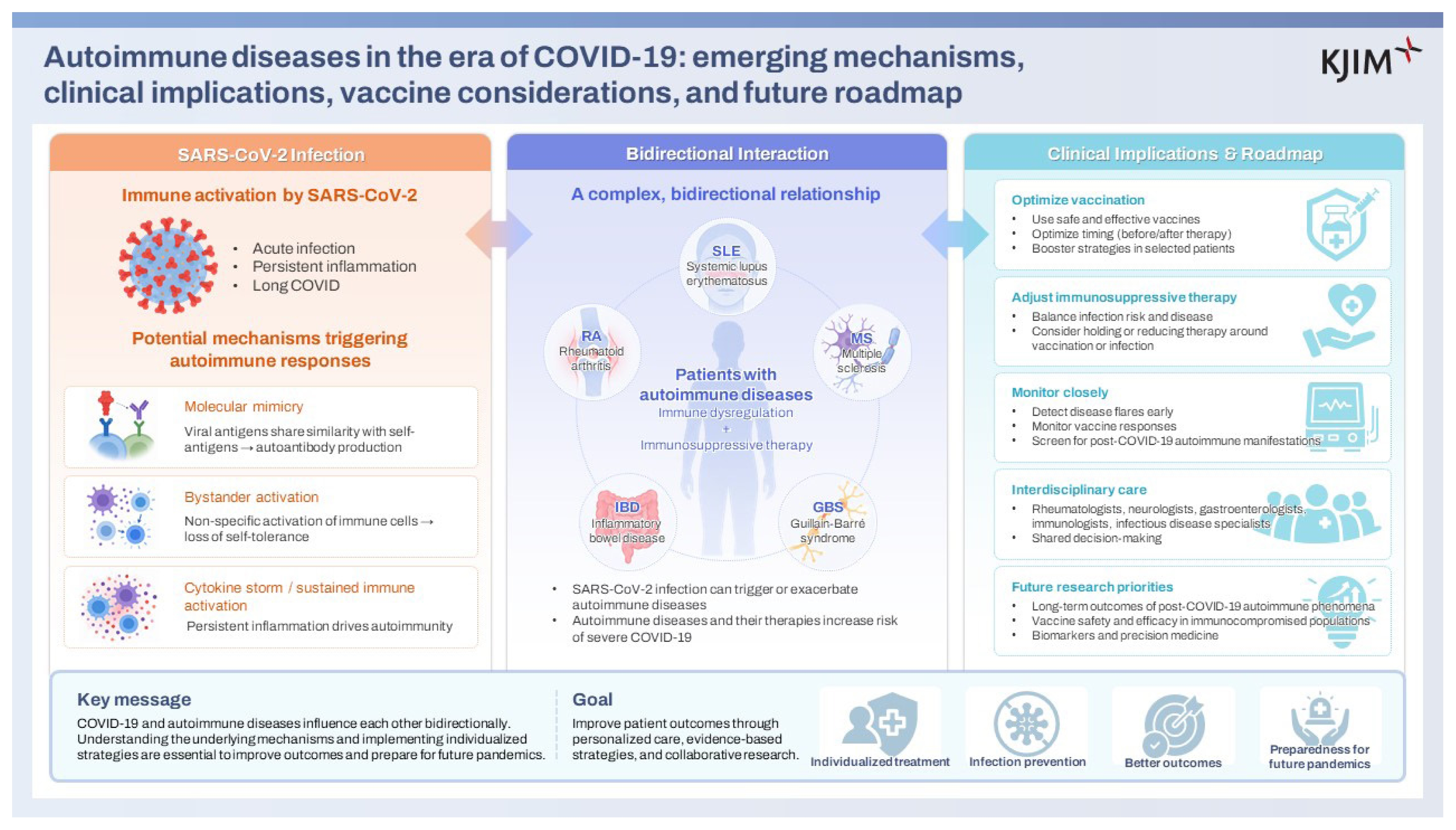
The bidirectional relationship between COVID-19 and autoimmune diseases has important clinical and immunological implications. Individuals with autoimmune diseases are at increased risk of infection and severe outcomes due to underlying immune dysregulation and the use of immunosuppressive therapies. Conversely, SARS-CoV-2 infection can trigger the onset or exacerbation of autoimmune diseases through mechanisms such as molecular mimicry, bystander activation, and sustained immune activation. These findings highlight the need for individualized patient management, including careful adjustment of immunosuppressive therapy, optimization of vaccination timing, and close monitoring of disease activity and vaccine responses. Future research should focus on elucidating the long-term outcomes of post-COVID-19 autoimmune manifestations and ensuring the continued safety and effectiveness of vaccines in immunocompromised populations. A deeper understanding of these complex interactions will be essential to improving clinical care, informing treatment strategies, and enhancing preparedness for future pandemics involving immune-mediated diseases.


 PDF Links
 PubReader
 ePub Link
 XML Download
 Full text via DOI
 Download Citation
 Print
Print