


INTRODUCTION
Pharmacological treatment of non-communicable diseases requires long-term use. Therefore, it is an existential threat that even a very small amount of carcinogen causes substantial problems through long-term accumulation. Hence, concerns about the possibility of cancer associated with antihypertensive drugs are continuously raised and resolved. Representative controversies have occurred with antihypertensive medications and overall cancers [1], angiotensin receptor blockers and lung cancer [2], nifedipine with breast and gastrointestinal tract cancers [3–5], and hydrochlorothiazide and skin cancer [6].
Recent concerns include the potential carcinogenic effect of impurities generated during manufacturing processes rather than the main drug ingredient. The European Medicines Agency withdrew medicines containing the active substance, valsartan, which was supplied by Huahai Pharmaceuticals, China, from the market in July 2018 because of contamination with N-nitrosodimethylamine (NDMA) [7]. The United States Food and Drug Administration followed this action after confirming its contamination. On July 7, 2018, the Korea Ministry of Food and Drug Safety (MFDS) immediately suspended 219 generic valsartan products potentially contaminated with NDMA, and finally withdrew 115 generic valsartan products on July 9, 2018 [8,9]. Investigations reported that Huahai Pharmaceuticals probably brought the new manufacturing process contaminating NDMA around 2012 [10]. Shortly after the withdrawal action in 2018, Pottegård et al. [11] reported no significant increase in overall cancer (adjusted hazard ratio [aHR] 1.09, 95% confidence interval [CI] 0.85–1.41) and no dose-response relation based on the Danish health registry during 4-year interval. Gomm et al. [7], in 2021, based on German health insurance data, reported a statistically significant association between exposure to NDMA-contaminated valsartan and hepatic cancer (aHR 1.16, 95% CI 1.03–1.31); however, no association was found with the overall cancer risk during a 3-year interval. In contrast, observational study based on the French National Health Data System reported that the use of the NDMA-contaminated valsartan did not increase the overall risk of cancer, but suggested the increased risk of liver cancer and melanoma for a median follow-up of 4 years [12].
In Korea, as an immediate administrative measure, > 90% of related valsartan generic prescriptions were suspended after the government announcement. Following this decision, prescriptions of the affected products were centrally blocked through the national Drug Utilization Review system, and patients were routinely switched to NDMA-uncontaminated valsartan, creating a quasi–policy-driven natural experiment in which exposure was largely determined by regulatory action rather than individual prescribing preference [13]. Korea’s health policy mandates an immediate withdrawal from the market if drugs have potential risks before confirming the substantiality of the risks. However, there may be unintended consequences of a sudden suspension of antihypertensive drugs on public health including a possibility that adherence to antihypertensive drugs might be reduced due to fear of cancer occurrence and overall distrust of medications; regarding cancer incidence, many health checkups might be conducted due to increased health concerns of patients with an increase in prostate, thyroid and breast cancer incidence, because they are frequently diagnosed during screenings; and a possibility that cardiovascular events might increase due to a decrease in adherence to antihypertensive medications.
Therefore, this study evaluated the association of NDMA-contaminated valsartan with cancer incidence. We classified valsartan into three groups—NDMA-contaminated, NDMA-uncontaminated, and initially suspended but eventually NDMA-uncontaminated—according to the MFDS – National Health Insurance Service (NHIS) linkage, and defined exposure periods using time-dependent variables that reflect the recall-driven switching patterns. We also compared all-cause and cardiovascular deaths before and after valsartan withdrawal.
METHODS
Data source
We conducted a long-term observation analysis using nationwide claims data from the NHIS-National Health Information Database (NHID), Korea. The NHIS is a single, mandatory medical care system that covers approximately 50 million people residing in Korea. We also linked the Cause of Death Statistics by Korea Statistics to NHIS-NHID via the Microdata Integrated Service (https://mdis.kostat.go.kr). This study was exempted from review by the Institutional Review Board of Seoul National University Hospital (E-2103-057-1203) because of the anonymized data. Informed consent requirement was unattainable, because the NHIS-provided data were de-identified. The NHIS approved the use of the released data in 2022. This study was conducted using pre-existing cohort data, and no experiments involving live vertebrates or human subjects were performed. Therefore, separate approval for experimental protocols was not required.
Study population
We enrolled patients treated with at least one valsartan prescription between January 1, 2013 and December 31, 2020. Minimal adherence was assessed based on the number of prescription days during the 3-months period immediately following the first observed valsartan prescription after cohort entry. Eligible patients had received a type of valsartan with prescription days ≥ 20% during this initial 3-month window and were aged ≥ 30 years. The cohort entry date was set to January 1, 2013, and patients were followed up until the date of death or December 31, 2020. We excluded patients with a history of cancer before the index date and incomplete baseline characteristics.
Exposure
Valsartan was grouped into three by the NHIS as follows: NDMA-uncontaminated, NDMA-contaminated, and initially-suspended but finally confirmed as NDMA-uncontaminated valsartan (eventually NDMA-uncontaminated valsartan). In Korea, the MFDS issued an emergency suspension of 219 valsartan products on July 7, 2018, narrowing to 128 confirmed NDMA-contaminated products by July 9 after testing [9]. Concurrently, the Ministry of Health and Welfare enacted a nationwide health insurance reimbursement suspension for 125 affected products effective July 9, 08:30 via the national Drug Utilization Review system, automatically blocking prescriptions and facilitating patient switching to uncontaminated alternatives (HIRA Insurance Notice 2018-407) [13]. However, patients prescribed with “eventually NDMA-uncontaminated” valsartan received same recall messages; thus, they might show similar health behavior as the NDMA-contaminated valsartan group. Therefore, we included them in the analysis as an internal control group.
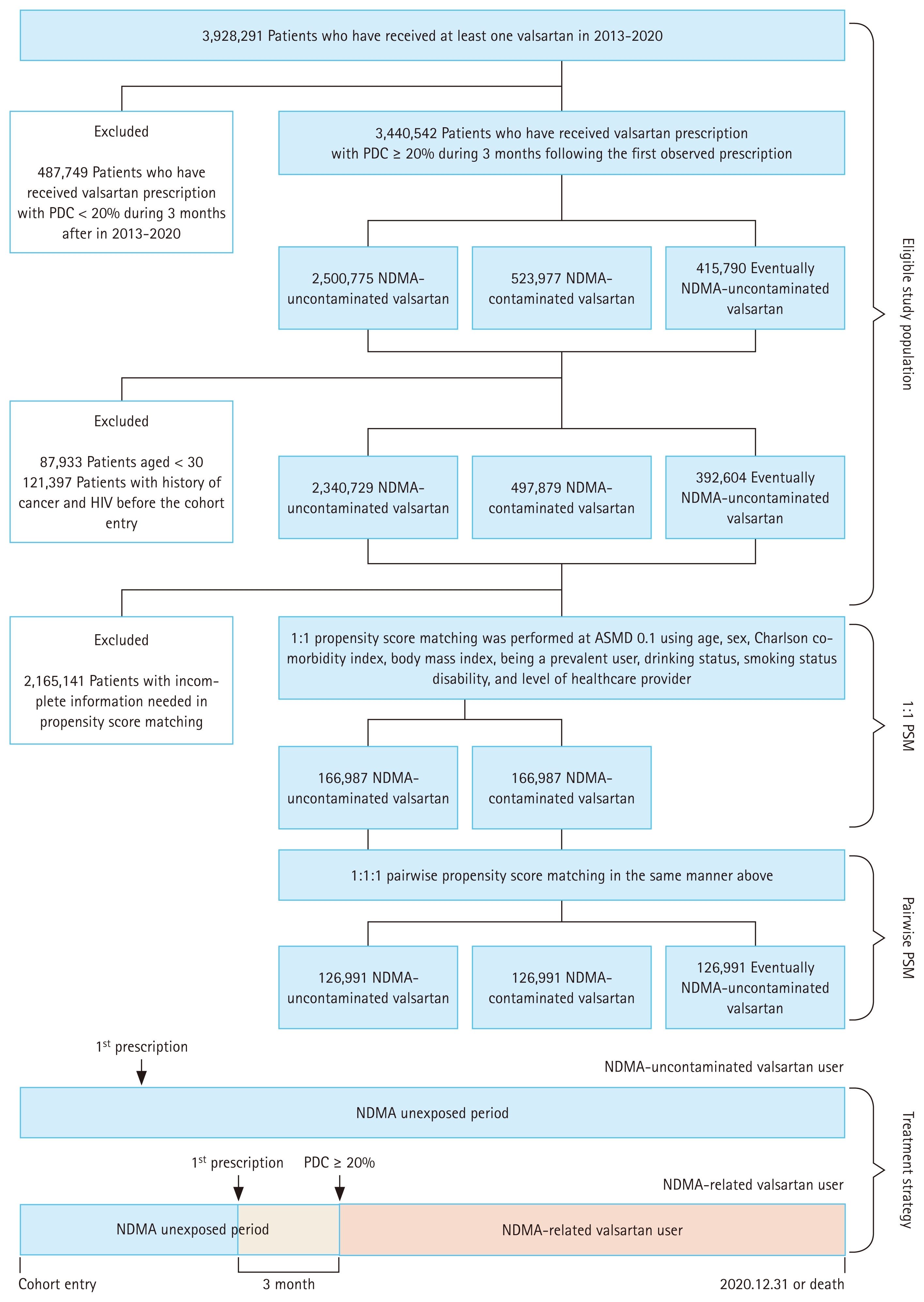
To avoid immortal time bias, valsartan was considered as a time-dependent exposure (Fig. 1). The period from January, 2013 to the first observed valsartan prescription or follow-up among patients who received NDMA-uncontaminated valsartan was defined as the NDMA-unexposed period. The follow-up time of patients who received NDMA-contaminated valsartan was grouped into the NDMA-unexposed and NDMA-exposed periods. For the eventually NDMA-uncontaminated valsartan, patients had NDMA-unexposed and eventually NDMA-uncontaminated valsartan-exposed periods.
Endpoints
The primary outcome was any primary cancer development. We also considered the incidence of 12 prevalent organ-specific cancers in Korea based on the International Classification of Diseases, 10th revision (ICD-10) codes (Supplementary Table 1). The onset date was defined as the first diagnosis of any or organ-specific cancers. To evaluate the safety, all-cause and cardiovascular death were considered as secondary outcomes. We divided the year 2018 from January 1 to July 6 (before withdrawal) and July 7 to December 31 (after withdrawal) to compare the incidence of safety outcomes. The ICD-10 codes of fatal cardiovascular events included hypertensive disease (I10–16), ischemic heart disease (I20–25), myocarditis/cardiomyopathy (I40–43), arrhythmias/heart failure (I46–52), cerebrovascular disease (I60–69), and aortic aneurysm (I70–73).
Statistical analysis
To address potential confounding effects, we performed propensity score matching (PSM) using nearest method to match participants in three groups. Matching was based on age, sex, body mass index, Charlson comorbidity index (CCI), prevalent user of antihypertensive medication, drinking status, smoking status, presence of disability, and level of healthcare provider from primary to tertiary hospitals (Supplementary Table 2). Using these variables, propensity scores were generated and the eventually NDMA-contaminated valsartan group was matched to each of the NDMA-uncontaminated valsartan and NDMA-contaminated valsartan (Fig. 1). Matching performance was validated by achieving an absolute standardized mean difference < 10% (Supplementary Table 2).
We compared participants’ baseline characteristics before and after PSM by using an analysis of variance (ANOVA) or Welch’s ANOVA for continuous variables and a χ2 test for categorical variables. Crude incidence rates (IRs) and their 95% CIs were estimated under the assumption that each event follows the Poisson distribution. To focus on new-user design, we isolated valsartan new users and time-dependent Cox models were used to estimate aHRs considering age, sex, CCI, and the year of the first observed valsartan prescription. The dose-response relationship was evaluated using the same model. We replicated all these analyses including valsartan prevalent users, considering being a prevalent user as a confounder. We pre-specified a 2-year lag period for the primary analysis to account for reverse causation and potential diagnostic delay, and conducted the analysis after excluding patients with events within 2 years of the first observed valsartan prescription. For the secondary outcome, the risk of all-cause death was estimated among valsartan new users, and cardiovascular death was assessed using a cause-specific competing risk model.
We performed sensitivity analyses using different lag periods (no lag, 6 months, and 1 year), and the Akaike information criterion (AIC) was used to evaluate the robustness across models. Furthermore, three sensitivity analyses were implemented to account for key factors: (i) analysis stratified by prostate cancer aged £ 65 or > 65 years old; (ii) analyses excluding patients diagnosed with any cancer during the first year of follow-up; (iii) analyses including only patients who received valsartan prescriptions since 2015.
The significance level for all statistical analyses was set at 0.05. To account for multiple comparisons, the Bonferroni correction was applied. Given that any cancer and 12 types of cancers were examined, p < 0.004 was considered the corrected significant threshold. Statistical analysis was performed using SAS Enterprise Guide (version 7.13; SAS Institute), R software (version 4.1.3; R project), and Rex (version 3.5.3; RexSoft).
RESULTS
Baseline characteristics
NDMA-uncontaminated (including original) and NDMA-contaminated valsartan were used from the study onset (January 1, 2013), while the eventually NDMA-uncontaminated valsartan was first claimed in September 2013. All prescriptions of valsartan invariably decreased after July, 2018, while those for NDMA-contaminated valsartan were totally eliminated. For the eventually NDMA-uncontaminated valsartan, although the temporary withdrawal was dismissed two days after initial suspension, the claim amount decreased in July–October, 2018, but maintained at the end of study period (December 31, 2020) (Supplementary Fig. 1).
We identified 3,231,212 participants who received at least one tablet of valsartan, satisfying minimal adherence to prescription. Table 1 shows the baseline characteristics of the entire cohort and by valsartan groups. Compared with the NDMA-uncontaminated group, the NDMA-contaminated and eventually NDMA-uncontaminated valsartan groups reported hypertensive medication history less. In contrast, patients in the NDMA-uncontaminated valsartan group had higher comorbidity (high CCI) and were more likely to be treated in secondary and tertiary hospitals.
All covariates before PSM differed according to the valsartan group. After 1:1 PSM, 166,987 users of NDMA-contaminated valsartan and 166,987 users of NDMA-uncontaminated valsartan users were identified (Supplementary Table 3). Next, we performed 1:1:1 pairwise-PSM for the comparison of the three groups (Supplementary Table 4). After this process, 126,991 users were matched in each group: NDMA-contaminated valsartan, eventually NDMA-uncontaminated valsartan, and NDMA-uncontaminated valsartan. The baseline characteristics between these valsartan groups were moderated after PSM (Supplementary Table 3, 4). The flow diagram of the study is presented in Figure 1. Before PSM, the mean follow-up years (standard deviation) of each exposure group were 7.2 (1.9), 7.1 (1.7), and 7.2 (1.6) for the NDMA-uncontaminated, NDMA-contaminated, and eventually NDMA-uncontaminated valsartan groups, respectively.
Incidence of primary cancers
The crude IRs (case per 1,000 person-years) of any cancer and their 95% CIs before and after PSM among valsartan new users were as follows: 20.62 (20.54–20.70) and 19.91 (19.63–20.20) for NDMA-uncontaminated valsartan; 19.43 (19.28–19.58) and 19.73 (19.44–20.01) for NDMA-contaminated valsartan; and 17.50 (17.35–17.65) and 18.27 (18.00–18.54) for eventually NDMA-uncontaminated valsartan, respectively (Supplementary Table 5). Particularly, the IRs per 1,000 person-years (95% CIs) of prostate cancer before PSM were 6.58 (6.52–6.64) for NDMA-uncontaminated valsartan, 5.51 (5.40–5.62) for eventually NDMA-uncontaminated valsartan, and 6.71 (6.59–6.83) for NDMA-contaminated valsartan. After PSM, the corresponding IRs (95% CIs) were 6.72 (6.51–6.93), 6.06 (5.87–6.27), and 6.90 (6.69–7.12), respectively.
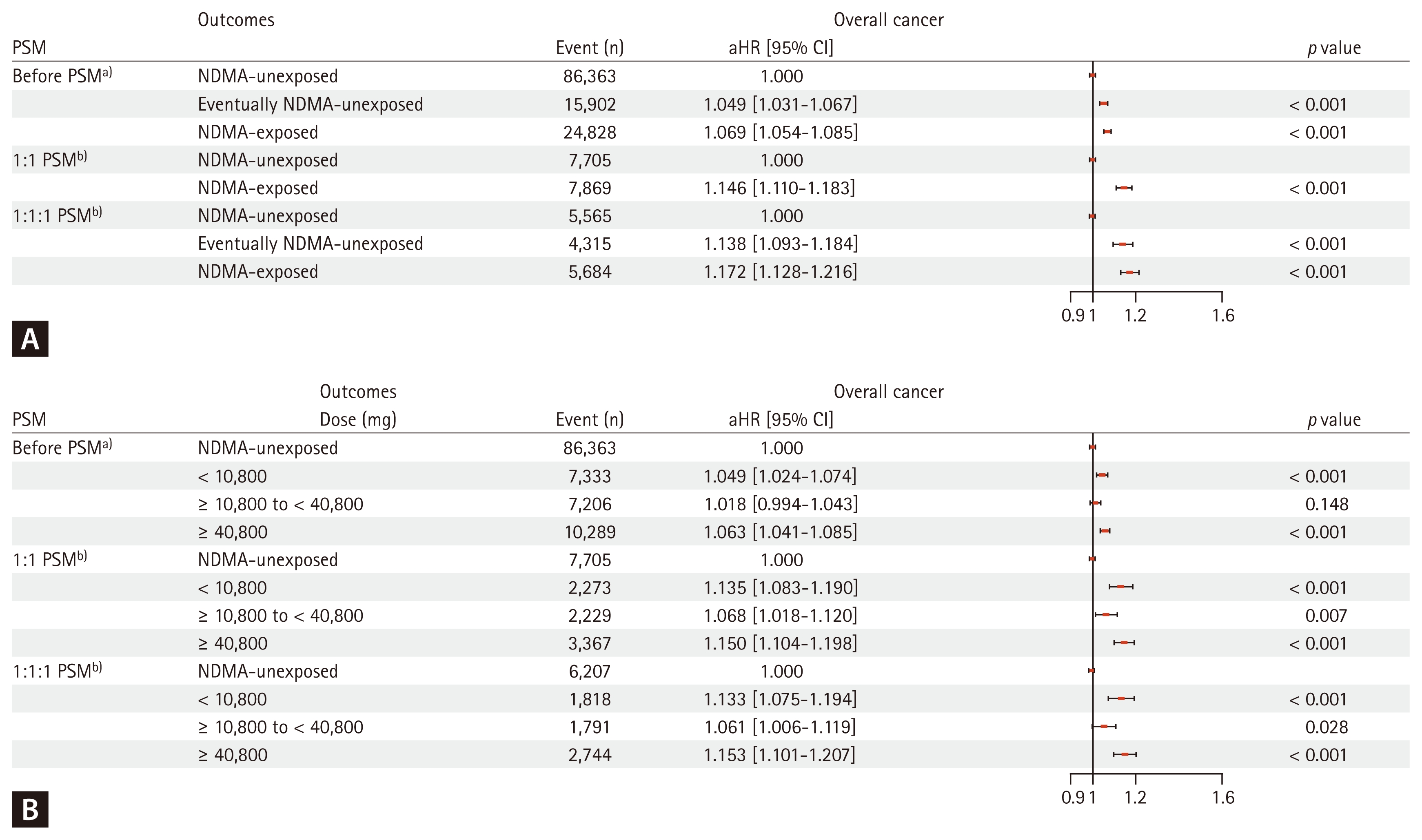
The aHRs of any cancer and 12 organ-specific cancers in valsartan new users, as well as in the original population, were estimated according to different lag criteria (6 months and 1 and 2 years) (Supplementary Table 6, 7). For each clinical outcome, the lowest AICs were detected when participants who experienced events within 2 years were excluded. The risks (95% CIs) of any cancer during the NDMA-exposed period (compared to those for the NDMA-unexposed) among valsartan new user were as follows: 1.069 (95% CI 1.054–1.085) before PSM, 1.146 (1.110–1.183) after 1:1 PSM; and 1.172 (1.128–1.216) after 1:1:1 PSM (Fig. 2A). Similar trends were observed in the original population, with risks of 1.098 (1.084–1.113) before PSM, 1.146 (1.113–1.180) after 1:1 PSM, and 1.172 (1.129–1.217) after 1:1:1 PSM (Supplementary Table 7). However, increases in any cancer risk in both populations were also observed during the eventually NDMA-unexposed period, a biologically implausible finding.
In analyses of 12 organ-specific cancers, prostate, stomach, and pancreatic cancers showed significantly increased risk during the NDMA-exposed period regardless of PSM. Notably, no increased risk was observed during the eventually NDMA-uncontaminated period after PSM (Supplementary Table 6 for valsartan new users; Supplementary Table 7 for original population). Colorectal cancer also showed a significantly increased risk during the NDMA-exposed period regardless of PSM. However, these cancers showed an increased risk during the eventually NDMA-uncontaminated period after 1:1:1 PSM, possibly suggesting the false-positive association (Supplementary Table 6).
To further investigate, we evaluated the dose-response relationship for organ-specific cancers with statistically significant differences (Fig. 2B, Supplementary Table 8). The aHR for any cancer was significant at the highest dose levels, regardless of PSMs among valsartan new users, as was for prostate cancer. Colorectal cancer showed dose-response relationships after 1:1 PSM, but pancreatic cancer did not 1:1:1 PSM. Stomach cancer showed no dose-response relationship under either PSMs.
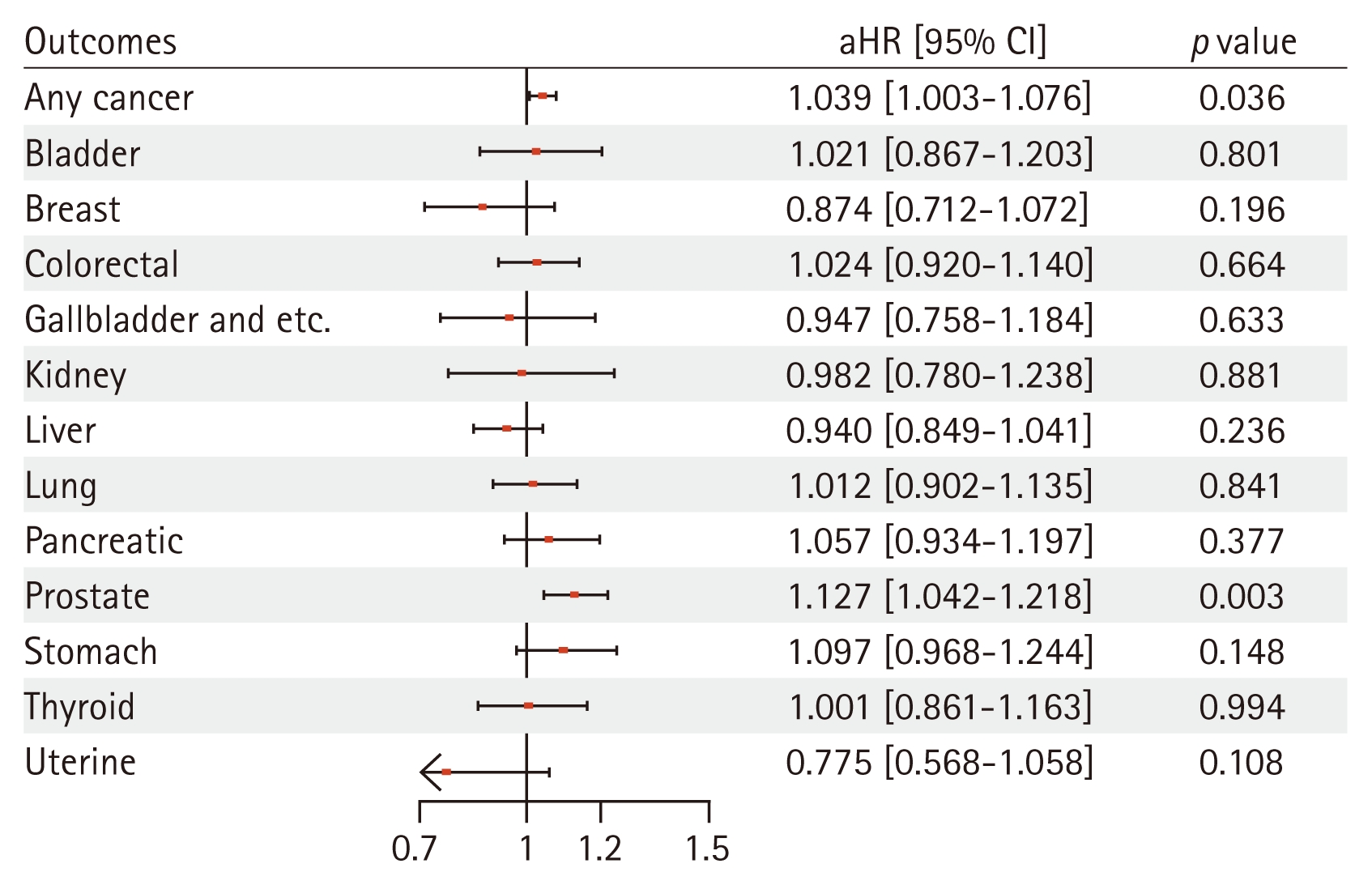
In the comparison between NDMA-contaminated valsartan and eventually NDMA-uncontaminated valsartan, we found equivalent results although statistical significance is marginal in any cancer (Fig. 3). Overall, the risks of most organ-specific cancers were increased during the NDMA-contaminated period, compared to eventually NDMA-uncontaminated valsartan period.
Next, we conducted sensitivity analyses for valsartan new users under three scenarios. First, subgroup analyses of prostate cancer revealed consistent risk trends across age group (Supplementary Table 9). Second, in another sensitivity analysis excluding patients with any cancer during the first year of follow-up, prostate cancer risks and dose-response relationships remained similar (Supplementary Table 10, 11). Third, when including patients who received valsartan since 2015, clinical significance was observed only for any cancer, although the trend was similar (Supplementary Table 12, 13).
Risks of all-cause and cardiovascular death before and after immediate banning
The crude all-cause and cardiovascular death rates (case per 1,000 person-years) among valsartan new users were evaluated before and after the immediate ban on NDMA-contaminated valsartan (Supplementary Table 14). No significant difference in the risks of all-cause or cardiovascular deaths was observed before and after the ban (July 7, 2018) among valsartan new users exposed to NDMA (p = 0.225 for all-cause death; p = 0.418 for cardiovascular death; Table 2). These findings remained consistent after 1:1:1 pairwise PSM, with p = 0.337 and p ≥ 0.999, respectively (Table 2).
DISCUSSION
In this nationwide cohort study, we observed an increased risk of any cancer associated with the use of NDMA-contaminated valsartan products. In analysis of 12 prevalent cancer outcomes, prostate cancer consistently showed an increased risk during the NDMA-exposed period with evidence of a dose–response pattern, whereas no excess risk was observed in the eventually NDMA-uncontaminated group after PSM, supporting a potential prostate-specific signal. In contrast, there was no evidence that the risks of all-cause and cardiovascular deaths increased after emergent banning. Although NDMA-contaminated valsartan is no longer on the market, the issue of impurities in antihypertensive drugs continues, including recent azide (azidomethyl-biphenyl-tetrazole) issue associated with the angiotensin type 1 receptor antagonist class, namely “sartan” [14], and the results of this study can offer valuable evidence for determining future health policy stance.
The principal strength of this study was the use of a high-quality nationwide registry, without selection bias. Because the NHIS in Korea is a single, mandatory medical care system, this study enabled the collection of > 3 million patients’ data for > 7 years. Additionally, as confirmed by the MFDS, we could provide the three valsartan categories from the NHIS. In particular, patients prescribed with “eventually NDMA-uncontaminated” valsartan had a high possibility of the same reaction as the NDMA-contaminated valsartan group. In principle, the Korean NHIS-NHID claim data do not allow the search for product names (only generic names can be searched) to prevent commercial use. However, with the 3-year’s efforts (2020 to 2022), the Korean NHIS accepted that it was a study for public purposes, and offered the data classified into three groups, not according to the individual brand names. Therefore, we minimized possible bias in four ways; by increasing the lag period after exposure, performing PSM, establishing dose-response relationship, and identifying no significant association in the eventually NDMA-uncontaminated valsartan group as an internal control. Lastly, in Korea, the National Plan for Cancer Control was implemented in 1996 and all cancer patients were benefited of reduced insurance rate regarding cancer treatment, which resulted in the near complete and correct registration (98.3%) of all cancers in the Korea National Cancer Incidence Database [15].
The International Agency for Research on Cancer classified NDMA as “probably carcinogenic to humans” owing to limited evidence of carcinogenicity in humans and sufficient evidence of carcinogenicity in animal studies [16]. NDMA is suspected to exert both localized and systemic carcinogenic effects due to the induction of DNA-damaging metabolites in the liver and gastrointestinal tract [17]. Furthermore, tumors in the gastrointestinal tract, lungs, and liver have been observed in animal studies [18]. Gastrointestinal tract tumors and uterine cancer (but not prostate cancer) showed possible association, which were all observed in animal experiment. Among the individual cancer sites evaluated in our study, prostate cancer most consistently met the a priori criteria of statistical significance, internal control contrast, and dose–response pattern, although causal inference remains limited. Although the association between prostate cancer and NDMA has not been reported previously, it is possible that urinary excretion of the carcinogenic substances cause prostate cancer [19]. According to an animal experimental study, if patients with a body weight of 70 kg and an average body surface area take the highest dose of valsartan (320 mg/day) containing the highest observed level of NDMA (20.19 μg) over a 6-year period, 126 cases of cancer per 100,000 people might occur [20], which is about double our overall estimation. The European Medicines Agency estimated that there could be one extra case of cancer for every 5,000 patients exposed to contaminated valsartan at the highest dose [21]. Therefore, it is not surprising that the patients with NDMA-contaminated valsartan group showed higher cancer incidence in this large-number, long term follow-up data.
The results of this study might be compared with those of the French group in many aspects [12]. The subjects of this study were about 5 years younger than those in the French study and had a higher proportion of patients without a history of previous hypertension medication use. However, there is a possibility that the proportion of high-risk patients (23% of CCI 3 3) could be higher, and the rates of alcohol consumption and smoking were also higher compared with those enrolled in French study. In the case of the study population, the number of subjects in this study was 3.2 million, twice the number of the French study’s 1.5 million. However, the number of patients in the NDMA-contaminated valsartan group was more than twice in the French group. This difference is attributed to the relatively small price difference between the off-patent original valsartan drug and the generic valsartan in Korea, leading to a higher market share for the original valsartan [22]. Regarding the duration of follow-up observation, this study was slightly longer, but still not considerably long. However, considering the distribution period from the market release to the banning of NDMA-contaminated drugs, it can be considered as the maximum duration possible. In the French study, there was no difference in the overall cancer risk, whereas in this study, the overall cancer risks were higher in both eventually NDMA-uncontaminated valsartan and NDMA-contaminated valsartan groups. There might be several explanations. First, the elevated cancer risk observed in the eventually NDMA-uncontaminated valsartan group is unlikely to represent an effect of NDMA exposure, and may instead reflect residual confounding related to generic drug selection, which could not be fully captured in claims data. Second, the overall cancer IR, more exactly detection rate, in this study (17.50–20.62 per 1,000 people) was higher than that in the French study (12.93–13.09 per 1,000 people) (Supplementary Table 5). This higher detection rate in Korea might be the Korean Cancer Registration Act, increasing insurance coverage regarding cancer treatment, which resulted in the near complete and correct registration (98.3%) of all cancers in the Korea National Cancer Incidence Database [15]. Therefore, it is possible that these differences in early detection rates might detect significant risk that could not be identified in smaller, more symptomatic cohorts with shorter follow-up. Although the NDMA-contaminated valsartan group showed a significantly higher overall cancer risk compared with the eventually NDMA-uncontaminated group, part of this excess may reflect recall-related surveillance and residual confounding; nevertheless, the association remained statistically significant even under conservative assumptions. Indeed, similar finding of abrupt increase in reporting of neoplasms associated with valsartan after medication recall regardless of NDMA contamination was reported [23]. However, our data showed that the overall cancer risk is still significantly higher even considering the possible false-positive rate. Regarding individual cancers, the French study showed a higher risk of liver cancer and melanoma, but this study did not show a significant increase of them. Melanoma is the most common tumor in Western countries, but its frequency is very low in East-Asian countries [24], hence it was not analyzed in this study’s evaluation of the top 12 prevalent cancers in Korea. On the other hand, in the case of liver cancer, the majority causes are hepatis B (74%) and C (9%) viral related, while toxin-related cases are very rare in Korea [25]. If NDMA acted as a carcinogenesis enhancer, there could make a significantly higher risk in the prevalent liver cancer in Korea. However, this study did not find such an effect, suggesting that NDMA is more likely to function as a direct carcinogen rather than a carcinogenesis enhancing function. In contrast to the French study, which found no difference, this study identified a significant association with prostate cancer. While there is no clear reason for this, such as ethnic/social differences in the cases of melanoma and liver cancer, the higher incidence (early detection) rates of these two tumors might contribute to the significant differences, otherwise not detected analysis of symptomatic patients during the limited 4-year follow-up period cases. Despite the several differences between two studies, we think that both studies add more value when together than alone in that they have confirmed that cancer issue with NDMA-contaminated valsartan is not a hypothetical threat, but is actually likely to increase cancer incidence.
Prostate cancer is not a frequently studied tumor in animal experiments, which limits the direct investigation of the mechanisms linking NDMA to prostate cancer. However, several studies have demonstrated associations between N-nitroso compounds, including NDMA, and prostate cancer. For instance, N-nitroso compounds have been shown to possess carcinogenic potential and are implicated in prostate cancer development [26,27]. Taken together with our prostate cancer findings, these data support biological plausibility for a potential NDMA-related effect, but the magnitude and causal nature of this association require further confirmation. These findings suggest that while the specific mechanism remains unclear, the potential relationship warrants further investigation.
When the results of clinical or basic research are applied to the real-world, it is not uncommon to observe an adverse effect from well-intentioned health behavior. After an alert by the European Medicines Agency and an urgent banning announcement by Korean MFDS, there were many patients’ complaints and anxieties. Physicians raised concerns that adherence to antihypertensive drugs might be reduced by immaterial cancer risk, resulting in increased cardiovascular events. Indeed, in Canada, immediate increase in emergency department visits for hypertension and a delayed increase and hospitalizations for stroke/transient ischemic attack following the recall [28]. However, the findings of this study did not show an increase in all-cause or cardiovascular deaths in the NDMA-contaminated or eventually NDMA-uncontaminated valsartan group, among whom adherence to cardiovascular medication might be reduced due to fear and distrust. To provide a clearer perspective on alternative angiotensin receptor blockers available in Korea and their relative usage, we have summarized this information in Supplementary Table 15, highlighting the potential impact of the NDMA-related restrictions on the prescription patterns during the study period. The valsartan recall incident highlights Korea’s excessive number of generic drugs, approved through a lenient “co-development and commissioned bio-equivalence” system. Unlike other countries, this system has led to quality control challenges and insufficient regulatory oversight, emphasizing the need for stricter approval processes and policies ensuring formularies include at least two similar class drugs for continuity and safety. Current regulatory frameworks set NDMA acceptable-intake limits to correspond to an excess lifetime cancer risk of ~1 case per 100,000 exposed individuals. Our modest relative risk elevation (aHR 1.07–1.17) is directionally compatible with these projections but cannot be directly equated with lifetime risk given the observational design and finite exposure duration.
Limitations
The current study has several limitations. First, in real-world research, there are several confounding factors, which makes it difficult to draw a definitive conclusion beyond hypotheses generation. However, research evaluating the impact of carcinogens, including medications for chronic non-communicable diseases, is virtually impossible to conduct randomized clinical studies for ethical reasons as well as the very small incidence of cancer, demanding long-term follow-up of many patients. Therefore, it might be an inherent limitation that only observational studies such as this study can be conducted. Above all, because regulations on drugs containing NDMA have become stricter and the possibility of marketability in the future is further reduced, research on the clinical significance of NDMA contaminants in the antihypertensive drug might be more difficult in the future. The unique advantage of this study is the presence of patients treated with “eventually NDMA-uncontaminated” valsartan. Although the overall duration of the suspension of this group was only 3 days from July 7 to July 9, 2018, the claim amount was continuously decreased, which raised the possibility that they showed the same reaction as the NDMA-contaminated valsartan group. Therefore, we evaluated the incidence of cancer, cardiovascular death and overall death in this group as an internal control group, similar to the “placebo” group of clinical trials. We believe that the existence of this group could compensate for the many limitations of observational research. Second, despite good covariates balance after PSM, residual confounding from unmeasured factors, including cancer screening behaviors, socioeconomic status, selection of generic products by hospital type/region rather than cost, and changes in healthcare utilization following the valsartan recall, cannot be fully eliminated. Third, we did not account for treatment switching/persistence. Although Supplementary Figure 1 shows eventually NDMA-uncontaminated valsartan maintained substantial post-recall use despite brief suspension and re-approval, any switching may alter healthcare utilization/cancer surveillance, causing non-differential misclassification biasing toward null. Fourth, incidental cancer diagnosis might have increased due to increased health examinations because of health concerns of patients and screening intensity, which may cause surveillance bias. The number of health examinations in each group could not be estimated because health examinations were not reimbursed by the NHIS, thus records were unavailable in the claim data. Although we adopted an active-comparator new-user design, and adjusted for healthcare utilization proxies, differential cancer surveillance across exposure groups cannot be fully excluded. Prostate cancer detection is particularly susceptible to surveillance bias, as it relies heavily on prostate specific antigen (PSA) testing and opportunistic screening rather than symptomatic presentation. Following the valsartan recall, differential increases in healthcare utilization among affected patients may have led to intensified prostate cancer screening, disproportionately influencing observed IRs in our NDMA-exposed groups. While our active-comparator design and adjustment for healthcare utilization proxies mitigate this concern to some extent, we interpret prostate cancer findings with additional caution, recognizing that differential PSA testing and heightened clinical attention post-recall may contribute to the observed association beyond any true NDMA effect. However, the incidence of thyroid or breast cancer was not significantly increased in NDMA-contaminated valsartan group, reducing the possibility of bias. Fifth, we only evaluated the incidence of cardiovascular and all-cause deaths, and other soft endpoints, such as angina, coronary revascularization, nonfatal myocardial infarction, or heart failure hospitalization were not evaluated. This was because the diagnostic accuracy of these soft endpoints based on the claim data only was very low. However, we could not exclude the possibility that the nonfatal cardiovascular event was actually increased due to decreased adherence to medical treatment. Sixth, this study did not differentiate between original and generic drugs, which may contain different contaminants. Additionally, we could not account for other medications or potential substances within the drugs that may influence the outcomes. These factors represent important limitations of our study. Finally, our study focused on the relative risk associated with higher cumulative doses of NDMA-contaminated valsartan, which cannot be directly translated into public health impacts. Precise dose exposure over time may be influenced by factors such as prescription adherence and patient behavior. Nonetheless, our findings align with biological understanding that cumulative exposure can amplify the carcinogenic risk, emphasizing the importance of monitoring cumulative exposure in clinical practice.
Conclusion
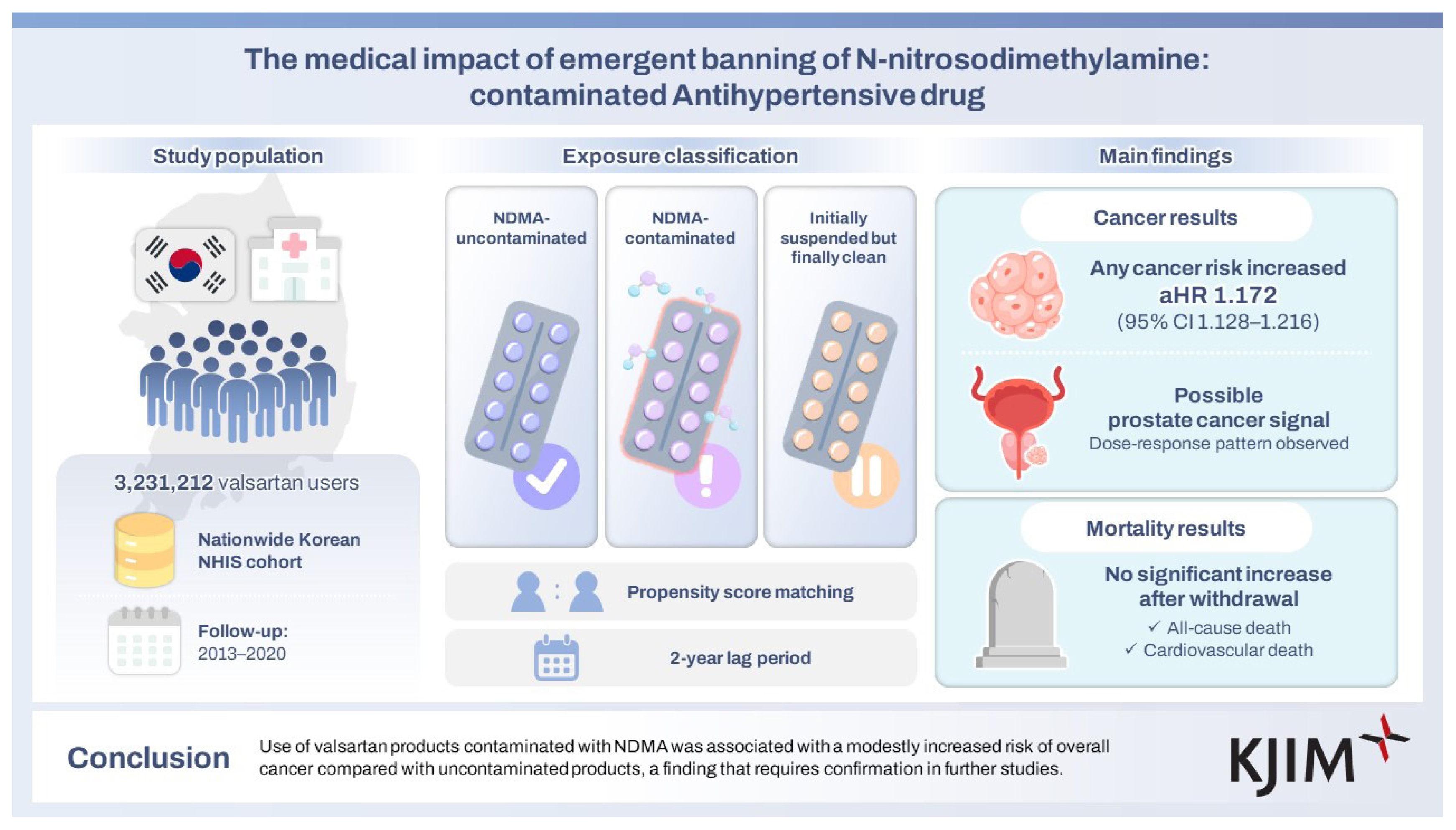
We demonstrated that the use of NDMA-contaminated valsartan products was associated with an increased risk of overall cancer, with prostate cancer showing a possible unfavorable association. However, there was no evidence that all-cause and cardiovascular deaths increased following emergent banning of possible NDMA-contaminated valsartan products, which support the health policy of the emergent action to potentially hazardous drugs. Nonetheless, these findings should be interpreted with caution given the several limitations and further validations are needed to confirm these findings.
KEY MESSAGE
1. The use of NDMA-contaminated valsartan products was associated with an increased risk of any cancer.
2. Findings from the analysis of 12 prevalent cancer outcomes suggest a possible unfavorable association between exposure to NDMA and prostate cancer, regardless of PSM.
3. There was no evidence that the risks of all-cause and cardiovascular deaths increased after emergent banning.


 PDF Links
 PubReader
 ePub Link
 XML Download
 Full text via DOI
 Download Citation
 Supplement figure 1
 Print
Print