


INTRODUCTION
The global prevalence of diabetes mellitus (DM) is steadily increasing, presenting a growing public health concern [1]. According to the International Diabetes Federation, in 2021, one in ten adults worldwide had diabetes, accounting for 11.5% of the global health expenditure, estimated at 966 billion USD [2]. According to one study, the global cost of diabetes is expected to reach approximately 2.25 trillion USD annually by 2030, owing to direct healthcare expenses and indirect costs, such as absenteeism and societal impacts [3]. Similarly, the prevalence of diabetes was 13.0% among US adults in 2018, which is projected to increase to 17.9% by 2060 [4].
South Korea is no exception, with increasing prevalence and costs reflecting these global trends [5,6]. The prevalence of diabetes was 12.5% among Korean adults aged ≥ 19 years in 2022 [7], and total medical costs have continued to increase. Several studies have addressed the financial burden of diabetes. For instance, in a study using the Korean national claims database, the diabetes-related economic burden in Korea in 2019 was USD 18,293 million, with an average per capita cost of USD 4,090 [8]. A 2017 study reported similar results, while another study linked diabetes drug expenditure with cardiovascular risk [9,10]. However, although studies have quantified the financial burden of diabetes, many did not include comprehensive laboratory data, such as hemoglobin A1c (HbA1c) levels, which are crucial for understanding the relationship between glycemic control and healthcare costs. International research has demonstrated that poor glycemic control is associated with higher medical expenditures [11–13] and that improving glycemic control reduces costs [14,15]. However, comprehensive data specific to South Korea remains scarce.
The therapeutic landscape of diabetes management is evolving. The introduction of novel hypoglycemic agents should effectively lower HbA1c levels and confer cardiovascular benefits [16,17]. Novel agents are expected to be cost-effective and provide cardiovascular benefits. Nonetheless, understanding the economic impact of improved glycemic control is essential for improving the cost-effectiveness of diabetes care strategies [18].
Therefore, in this study, we aimed to evaluate the relationship between medical costs and HbA1c levels and assess the potential cost savings associated with better glycemic control in South Korea. Specifically, the study focused on documenting the medical cost increases associated with a 1% increase in HbA1c and determining how much cost saving might be realized by a 1% reduction in HbA1c. This research was conducted to improve our understanding about the economic impact of diabetes management in South Korea and clarify the potential implications for healthcare policy, clinical practice, and the utilization of novel therapeutic agents.
METHODS
Data source and extraction
Patient data were extracted from the records at Uijeongbu St. Mary’s Hospital between January 1, 2019 and December 31, 2023. The extraction focused on patients who underwent HbA1c testing and had healthcare cost data available during the study period. Among the 88,008 eligible patients, those aged < 18 years (n = 1,552) and clinical trial participants (n = 39) were excluded. Therefore, the final analysis included data of 86,417 patients. This study was designed as a cross-sectional analysis in which healthcare costs were summarized in relation to patient baseline HbA1c levels.
Age, sex, height, weight, and body mass index (BMI) data at the time of HbA1c testing were collected. In addition, information on oral hypoglycemic agents (OHAs) and insulin prescribed before and after HbA1c testing was collected. Hypoglycemic agents included metformin, dipeptidyl peptidase 4 (DPP4) inhibitors, sodium glucose co-transporter-2 (SGLT2) inhibitors, sulfonylureas, and thiazolidinedione (TZD). During the study period, patients with DM were identified using ICD-10 codes E10–E14. Patients were classified as having DM if they had at least one ICD-10 code for diabetes and were prescribed anti-diabetic medications during the study period.
According to the Korean insurance system, “severe refractory disease” refers to a condition that is treatable but not curable, requiring continuous management. Treatment discontinuation often results in death or serious disability. Owing to the substantial clinical and economic burden of these conditions, patients receive reduced out-of-pocket (OOP) expenses under a special reimbursement policy. In this study, this was defined as having a severe disease exemption (SDE) status, which included diagnoses of cancer (ICD-10: C00–C97), major cardiovascular disease—defined as myocardial infarction (I21–I22) or stroke (I60–I64)—rare diseases, or chronic kidney disease (CKD; N18), based on corresponding disease codes.
In South Korea, healthcare is primarily managed by the National Health Insurance (NHI) system, which provides nearuniversal coverage [19]. Premiums are income-based, promoting equitable access to healthcare services. In cases of financial hardship, the government offers medical aid, a public assistance program that fully covers essential medical expenses. In this study, patients were categorized according to insurance status as follows: NHI-covered, medical aid beneficiaries, uninsured, recipients of Industrial Accident Compensation Insurance, and those with unknown status.
To calculate medical costs, annual hospitalization and outpatient costs were extracted from the date of the first HbA1c measurement. All cost variables represent annual healthcare expenditures, calculated by aggregating inpatient and outpatient costs over 1 year following the index HbA1c measurement for each patient. OOP expenses were calculated for each category. Total costs were defined as the sum of hospitalization and outpatient costs (total cost = inpatient cost + outpatient cost). The insurance expenditure (IE) was calculated by deducting personal contributions (OOP expenses) from the total cost. The costs were initially recorded in KRW and converted to USD using the average annual exchange rate in 2023 (1 USD = 1,300 KRW). To account for changes in the value of medical expenditures over time, all cost variables were adjusted to 2023 values using annual Consumer Price Index data from Statistics Korea (2019: +0.4%, 2020: +0.5%, 2021: +2.5%, 2022: +5.1%, 2023: +3.6%) [20].
Statistical analysis
Statistical analysis was performed using R (version 4.2.2; R Foundation for Statistical Computing, Vienna, Austria). Descriptive statistics were used for summarizing baseline characteristics of the study population. Continuous variables are presented as means ± standard deviations for normally distributed data and medians (interquartile ranges) for skewed data. Categorical variables are summarized as frequencies and percentages.
Patients were categorized into three groups based on their baseline HbA1c levels:
1) HbA1c < 6.5% (normal glycemic group, NG)
2) HbA1c ≥ 6.5 to < 8% (moderately hyperglycemic group, MG)
3) HbA1c ≥ 8% (highly hyperglycemic group, HG)
The NG group was defined based on HbA1c levels alone, representing no healthy control population but rather a heterogeneous clinical population receiving care for various medical conditions.
In addition to the primary cross-sectional analyses based on the index HbA1c measurement, analyses of glycemic control dynamics were performed as a descriptive secondary analysis using two HbA1c measurements within 12 months. The earliest recorded HbA1c value during the study period was defined as the baseline measurement. To assess longitudinal changes in glycemic control, the second HbA1c value was calculated as the average of all HbA1c measurements obtained within 12 months following the baseline test. Analyses of glycemic control dynamics excluded patients without a second HbA1c measurement within 12 months of baseline (n = 11,741). The patients were reclassified as follows:
1) Stable glycemic control: patients remained in the same glycemic category at baseline and follow-up. Regarding descriptive and comparative analyses, this group was further stratified according to baseline HbA1c level into low-stable (NG → NG), mid-stable (MG → MG), and high-persistent (HG → HG).
2) Improved glycemic control: patients transitioned to a lower glycemic category (for instance, HG → MG, HG → NG, MG → NG).
3) Worsened glycemic control: patients transitioned to a higher glycemic category (for instance, NG → MG, NG → HG, MG → HG).
Analysis of variance was used for comparing means across HbA1c groups for continuous variables; chi-square tests were used for assessing differences in categorical variables. Considering continuous variables (such as age and costs), normality was assessed using the Shapiro–Wilk test; when normality assumptions were not met, non-parametric tests were applied.
A linear regression model was used for evaluating associations between HbA1c levels and healthcare costs (total costs, inpatient costs, outpatient costs, OOP costs, and IE) as continuous outcomes. Initial analyses were performed using univariate linear regression to provide a direct assessment of the relationship between HbA1c level and each cost variable. To account for potential confounding, multivariate linear regression models were additionally fitted, adjusting for age, sex, BMI, CKD, cancer, SDE status, and insurance class. Given that the cost variables exhibited right-skewed distributions, supplementary sensitivity analyses were performed using generalized linear models (GLMs) with a gamma distribution and log link. GLM coefficients were exponentiated to obtain percent changes in cost per 1% increase in HbA1c. Regression analysis results are presented as beta coefficients (B), standard errors (SE), and p values for each independent variable. Statistical significance was set at p < 0.05.
Ethics
This study adhered to the ethical principles outlined in the Declaration of Helsinki and was approved by the Institutional Review Board of Uijeongbu St. Mary’s Hospital (UC23ZASI0129). Owing to the retrospective cohort design, the study posed no risk of physical or psychological harm to the participants. Therefore, the requirement for informed consent was waived.
RESULTS
Baseline characteristics and costs by HbA1c level
A total of 86,417 study participants were categorized into three groups based on baseline HbA1c levels: 61,961, 15,065, and 9,391 individuals in the NG, MG, and HG groups, respectively (Table 1). The average HbA1c was 5.6 ± 0.4 in the NG, 7.1 ± 0.4 in MG, and 9.8 ± 1.7 in HG groups. The mean age was 58.6 years in the NG, 65.1 in MG, and 60.7 in HG groups. Men accounted for 52.2%, 56.1%, and 58.9% of the participants in the NG, MG, and HG groups, respectively.
BMI averaged 24.3 kg/m2 in the NG, 25.1 kg/m2 in MG, and 24.9 kg/m2 in HG groups. Diabetes was present in 17.8% of the participants in the NG, 75.2% in MG, and 90.5% in HG groups. The mean number of OHAs administered per patient was 0.1 in the NG, 1.0 in MG, and 1.6 in HG groups. Metformin was used in 4.6% of the participants in the NG, 42.9% in MG, and 61.2% in HG groups. DPP4 inhibitors were used in 3.5%, 29.2%, and 47.2% of NG, MG, and HG patients, respectively. Similarly, SGLT2 inhibitors were administered to 0.8% of the participants in the NG, 9.5% in MG, and 16.0% in HG groups. Insulin use increased across the groups: 6.8% in the NG, 26.8% in the MG, and 56.0% in the HG. CKD was observed in 25.3%, 30.3%, and 31.5% of the participants in the NG, MG, and HG groups, respectively. The prevalence rates of cancer were 6.6%, 9.6%, and 8.8% in the NG, MG, and HG groups, respectively. NG (19.8%), MG (25.1%), and HG (23.5%) were classified as having an SDE status.
The distribution of insurance coverage was similar across the HbA1c groups: 89.2% in the NG, 90.5% in the MG, and 89.7% in the HG were covered by NHI, and 6.8% in the NG, 8.0% in the MG, and 8.7% in the HG received medical aid.
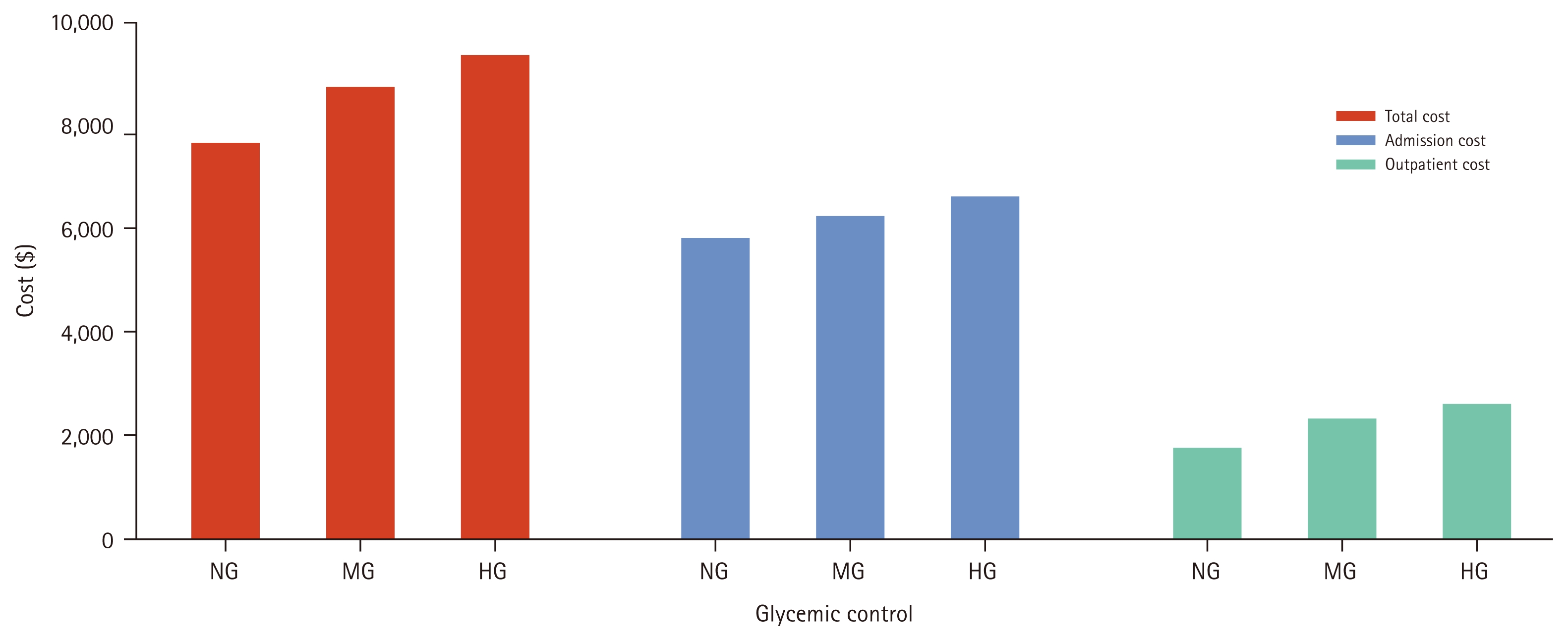
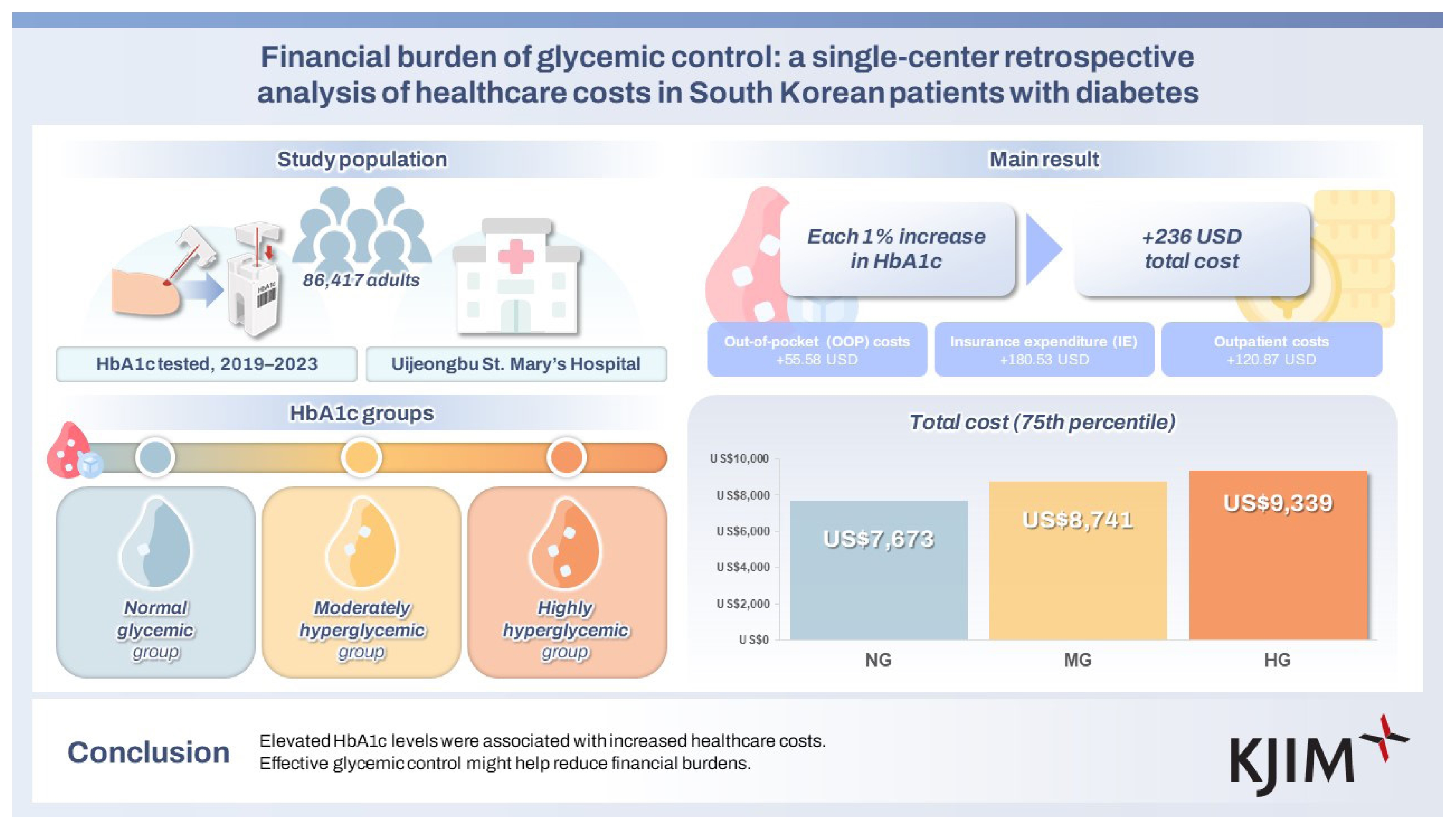
The HG group had the highest median total cost; the 75th percentile had a median total cost of 9,339 USD, compared with 7,673 USD in the NG and 8,741 USD in the MG groups (p < 0.001). Inpatient costs followed a similar pattern: the 75th percentile cost in the HG group was 6,677 USD, while the NG and MG had lower costs (5,899 USD and 6,278 USD, respectively). Outpatient costs were also higher in the HG group, with a 75th percentile value of 2,651 USD, compared with 1,849 USD in the NG and 2,388 USD in the MG (p < 0.001) (Fig. 1).
Regression analysis of HbA1c level versus cost relationships
Total healthcare costs were higher by an estimated 236.11 USD (SE: 28.72) per 1% increase in HbA1c level. The corresponding regression equation was as follows: total cost = 5,399.73 + 236.11 × HbA1c, with an F-value of 67.59. For inpatient costs, each 1% increase in HbA1c level was associated with a 67.37 USD higher cost (SE: 22.11); the regression equation was inpatient cost = 4,525.69 + 67.37 × HbA1c, with an F-value of 9.28. In regard to outpatient costs, a 1% increase in HbA1c level was associated with a 120.87 USD higher cost (SE: 12.81); the regression equation was outpatient cost = 1,146.08 + 120.87 × HbA1c (F-value: 89.05). OOP costs were higher by 55.58 USD (SE: 7.29) per 1% increase in HbA1c level; the regression equation was OOP cost = 1,394.76 + 55.58 × HbA1c (F-value 58.10). Finally, IEs were higher by 180.53 USD (SE: 24.51) per 1% increase in HbA1c level; the regression equation was IE = 4,004.97 + 180.53 × HbA1c (F-value: 54.26) (Table 2).
In multivariate linear regression models adjusted for age, sex, BMI, CKD, cancer, SDE status, and insurance class, higher HbA1c levels were associated with significantly higher outpatient and OOP costs, whereas the associations with total cost, inpatient cost, and IE were not significant (Table 3).
Full regression coefficients for all covariates across the five cost domains are presented in Supplementary Table 1. CKD, cancer, and SDE status were consistently the strongest predictors of higher healthcare expenditures.
In regard to the sensitivity analyses using gamma log-link GLMs, the direction of the associations remained consistent. In Gamma log-link GLMs, each 1% higher HbA1c level was associated with an approximately 6.0% increase in outpatient costs and 1.7% increase in OOP costs, whereas no significant association was observed for total, inpatient, or IE (Supplementary Table 2).
Annual costs by A1c levels
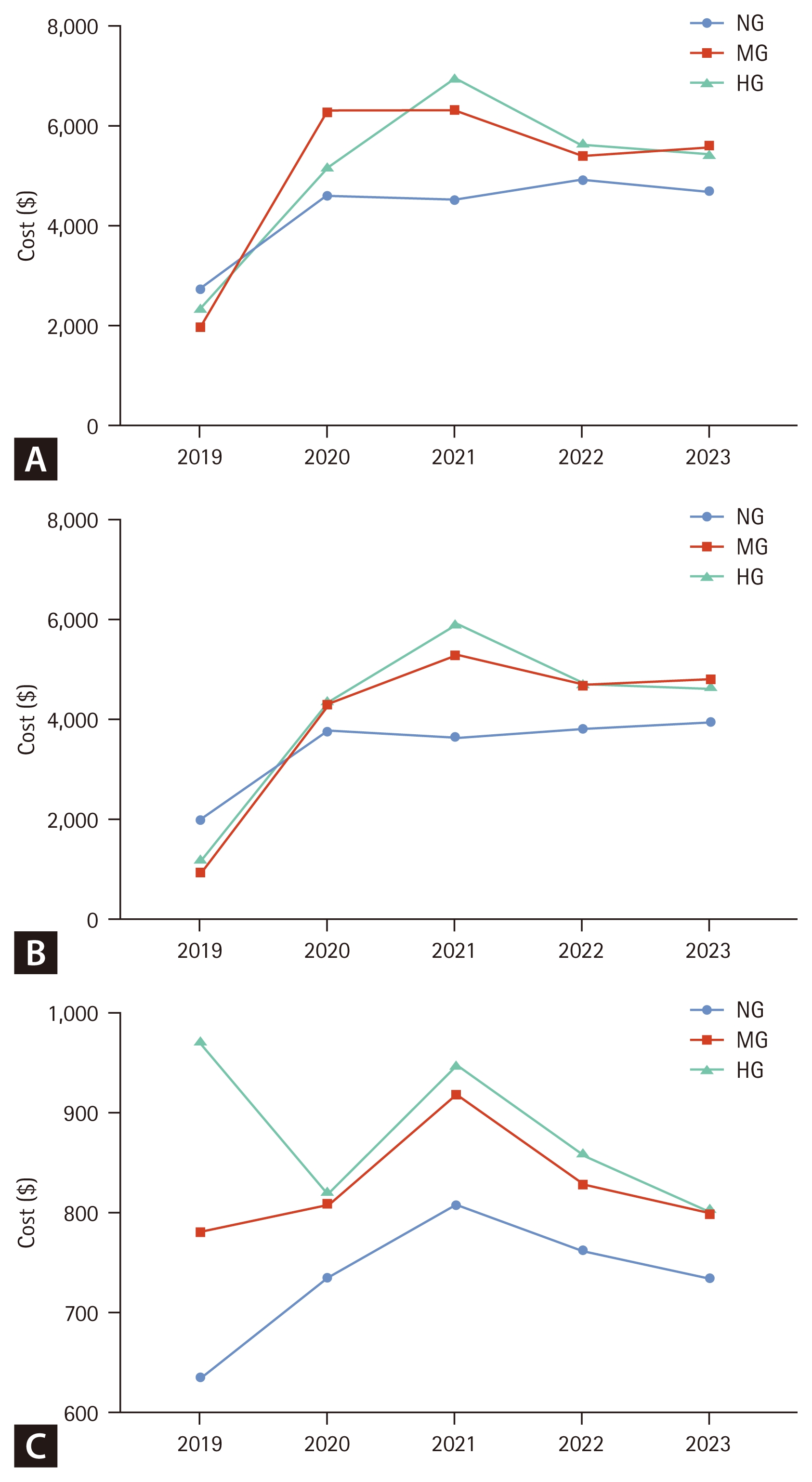
The annual total, inpatient, and outpatient costs were analyzed for all three HbA1c groups from 2019 to 2023 (Fig. 2).
In 2019, the NG group had the highest 75th percentile total cost of 2,703 USD compared with 1,970 USD in the MG and 2,309 USD in the HG groups. By 2023, these costs increased; the 75th percentile reached 5,485 USD in the HG, 5,594 USD in the MG, and 4,677 USD in the NG groups. Over the years, the MG and HG groups had higher total costs at the 75th percentile than did the NG group, except in 2019.
The inpatient costs at the 75th percentile followed a similar pattern. In 2019, the inpatient cost in the HG group was 1,210 USD, compared with 2,035 USD in the NG and 1,010 USD in the MG groups. By 2023, the 75th percentile inpatient cost increased to 4,693 USD in the HG group, 4,843 USD in the MG, and 3,982 USD in the NG groups. The 75th percentile values increased the most between 2020 and 2021, particularly in the HG and MG groups.
Outpatient costs also increased steadily over the 5-year study period, although they were generally lower than inpatient costs. In 2019, the 75th percentile outpatient costs in the HG, NG, and MG groups were USD 967, 632, and 779, respectively, and by 2023, the corresponding values were USD 796, 732, and 796, respectively. Outpatient costs were consistently higher in the HG and MG than in the NG group during the study period.
Annual OOP and IE costs by HbA1c level
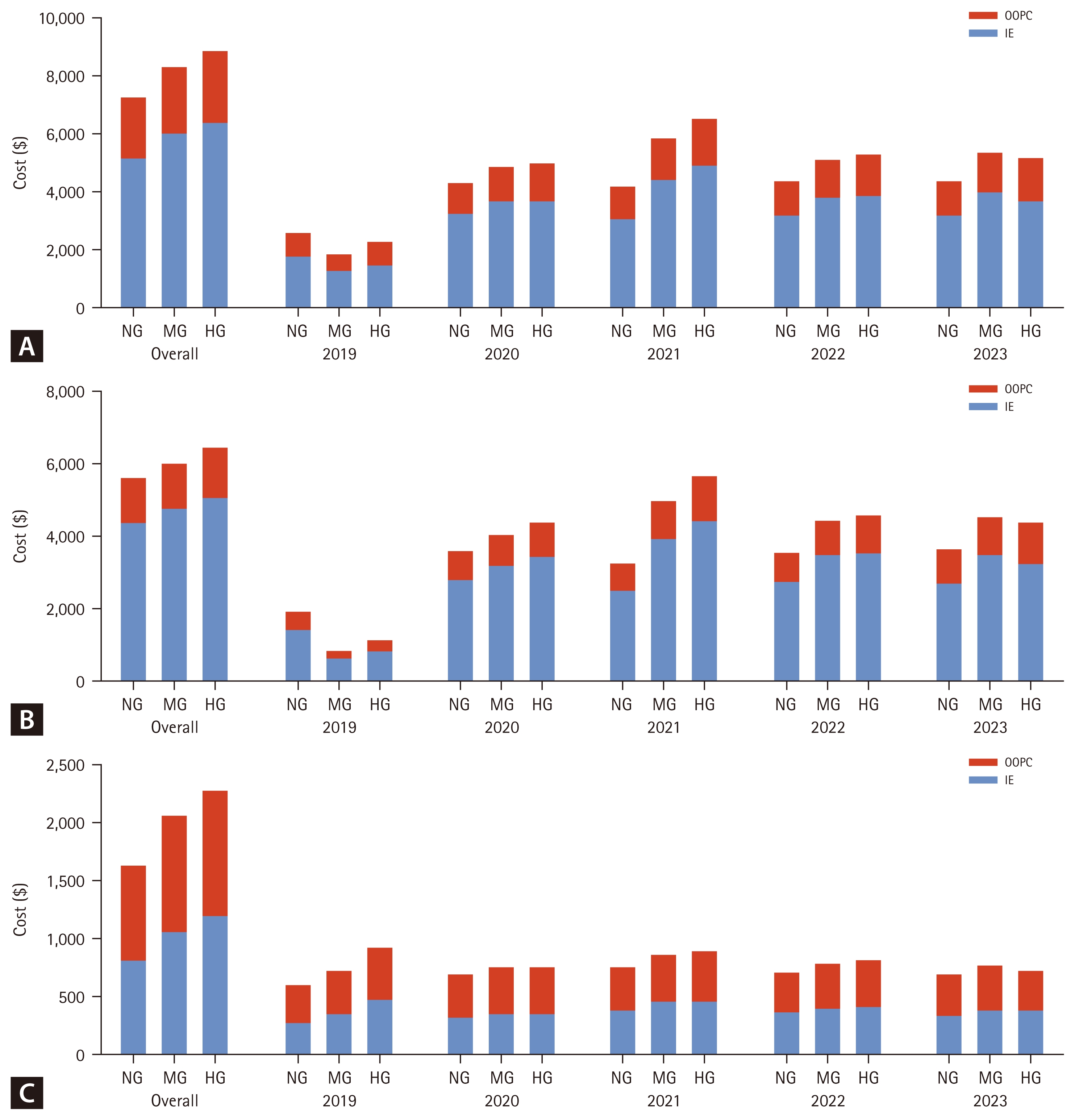
During the study period, the highest 75th percentile for IE was observed in the HG group at 6,416 USD, followed by the MG group at 6,030 USD and the NG group at 5,193 USD. The 75th percentile for OOP mirrored this trend: HG = 2,582 USD, MG = 2,388 USD, and NG = 2,138 USD. Both the IE and OOP costs increased across all groups from 2019 to 2023; however, the HG group often exhibited the highest annual increases in OOP and IE costs.
In the inpatient setting, the 75th percentile of annual IE costs was the highest in the HG group, followed by the MG and NG groups (HG: 5,039 USD; MG: 4,711; NG: 4,372 USD). The HG group also encountered the highest inpatient OOP costs at the 75th percentile (1,422 USD). Steady increases in inpatient costs were observed throughout the study period. In 2023, the HG and MG incurred higher OOP costs than the NG group.
The annual outpatient IE costs showed a distinct pattern, with the 75th percentile remaining highest in the HG group. In this group, the 75th percentile outpatient IE cost was 481 USD in 2019 and 384 USD in 2023. Furthermore, the proportion of OOP costs in the total outpatient costs appeared to be higher than that of the total inpatient costs (Fig. 3).
Costs by diabetes, CKD, and SDE status
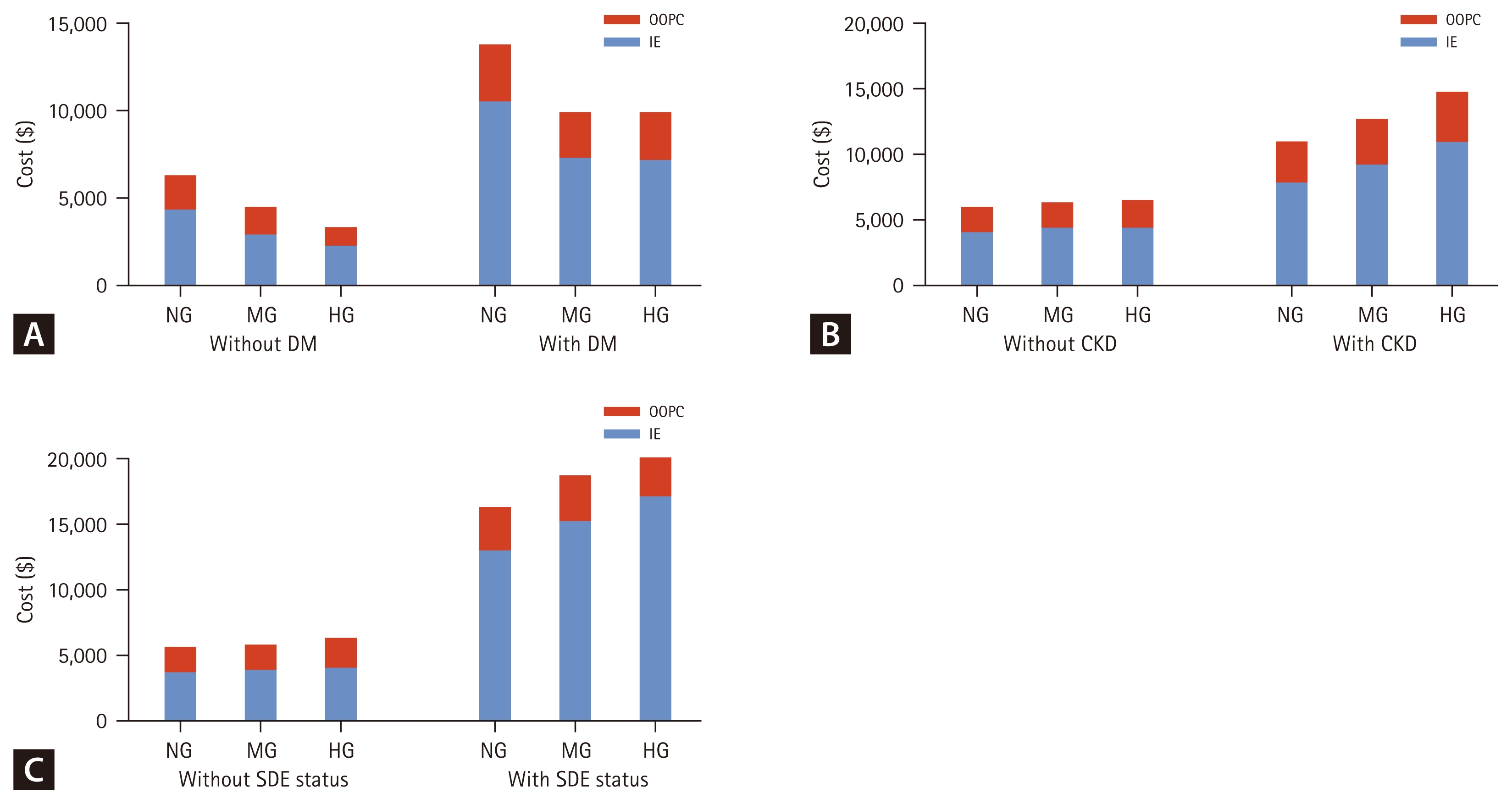
Using the subgroup analysis, patients with DM, CKD, or SDE incurred significantly higher costs than did their non-DM, non-CKD, and non-SDE counterparts. In patients with DM, the NG group incurred the highest costs, whereas in patients with CKD and SDE, the costs increased progressively with HbA1c levels (Fig. 4). The detailed costs for the subgroups and numbers for each group are summarized in the legend of Figure 4 and Supplementary Table 3.
Costs by insurance class
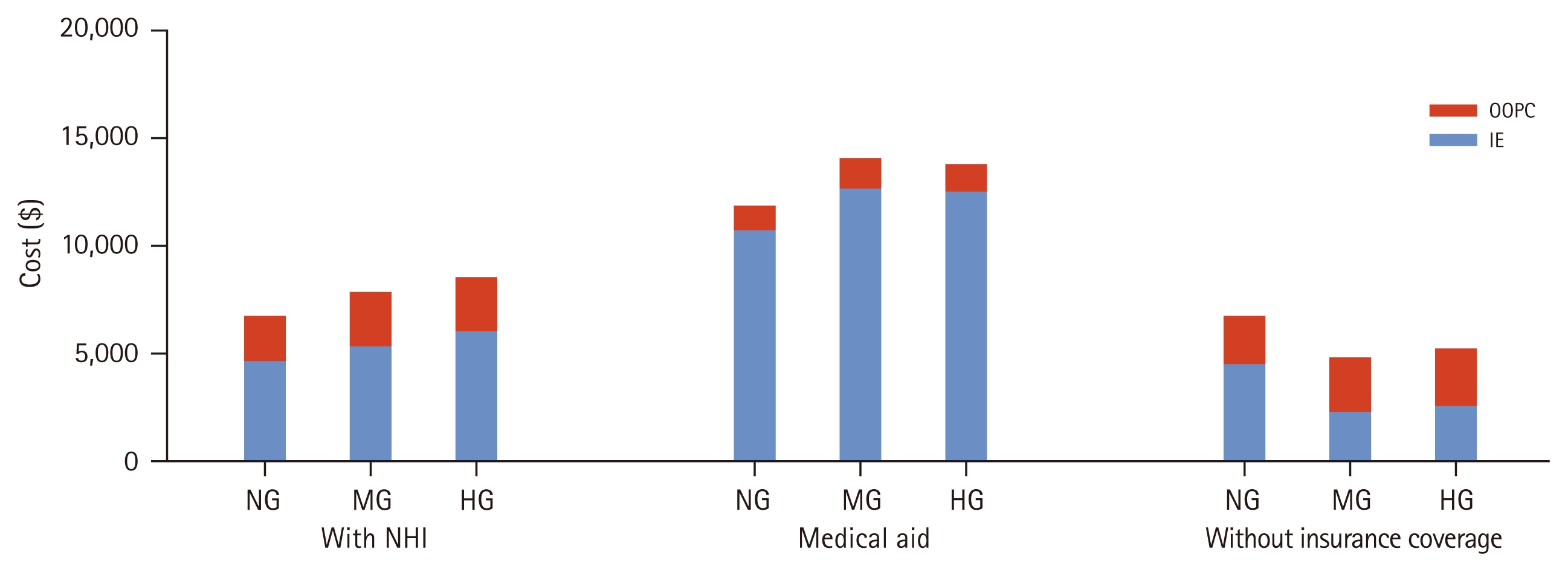
In patients covered by NHI, the total costs at the 75th percentile increased from NG to HG (NG, 6,948 USD; MG, 7,916 USD; HG, 8,726 USD). This increase was reflected in the IE, which accounted for most of the costs (NG, 4,751 USD; MG, 5,455 USD; HG, 6,022 USD). However, the OOP costs increased only modestly (NG, 2,197 USD; MG, 2,461 USD; HG, 2,704 USD). Patients who received medical aid incurred the highest total costs. The 75th percentile of total costs was similar in the MG and HG groups (MG, 13,987 USD; HG, 13,848 USD) but lower in the NG group (NG, 11,966 USD). Despite the higher total costs, OOP cost remained low for medical aid recipients (NG, 1,205 USD; MG, 1,382 USD; HG, 1,367 USD), but IE costs were much higher (NG, 10,761 USD; MG, 12,605 USD; HG, 12,481 USD). In patients without insurance coverage, the total costs at the 75th percentile were notably lower than those of medical aid recipients (NG, 6,837 USD; MG, 4,989 USD; HG, 5,371 USD). However, OOP cost accounted for a substantial proportion of the total costs and remained high (NG, 2,311 USD; MG, 2,668 USD; HG, 2,725 USD). The IE costs were relatively low and showed intergroup variability (NG, 4,526 USD; MG, 2,321 USD; HG, 2,646 USD) (Fig. 5).
Supplementary Table 4 presents the distribution of key health conditions across the insurance groups. Medical aid beneficiaries had a higher prevalence of severe health conditions than patients with NHI or no insurance coverage. Specifically, 30.1% of medical aid patients were diagnosed with DM, compared with 27.7% of patients with NHI, and only 5.8% of those without insurance. Similarly, CKD was most common among medical aid recipients (35.9%), followed by NHI (26.8%) and uninsured patients (10.4%). The prevalence of cancer was 7.2% for patients receiving medical aid or NHI, but only 2.8% for uninsured patients. SDE status was more prevalent among medical aid patients (30.3%) than among NHI (20.8%) and uninsured (9.6%) patients. All intergroup differences were statistically significant (p < 0.001).
Comparison of healthcare costs by glycemic control dynamics
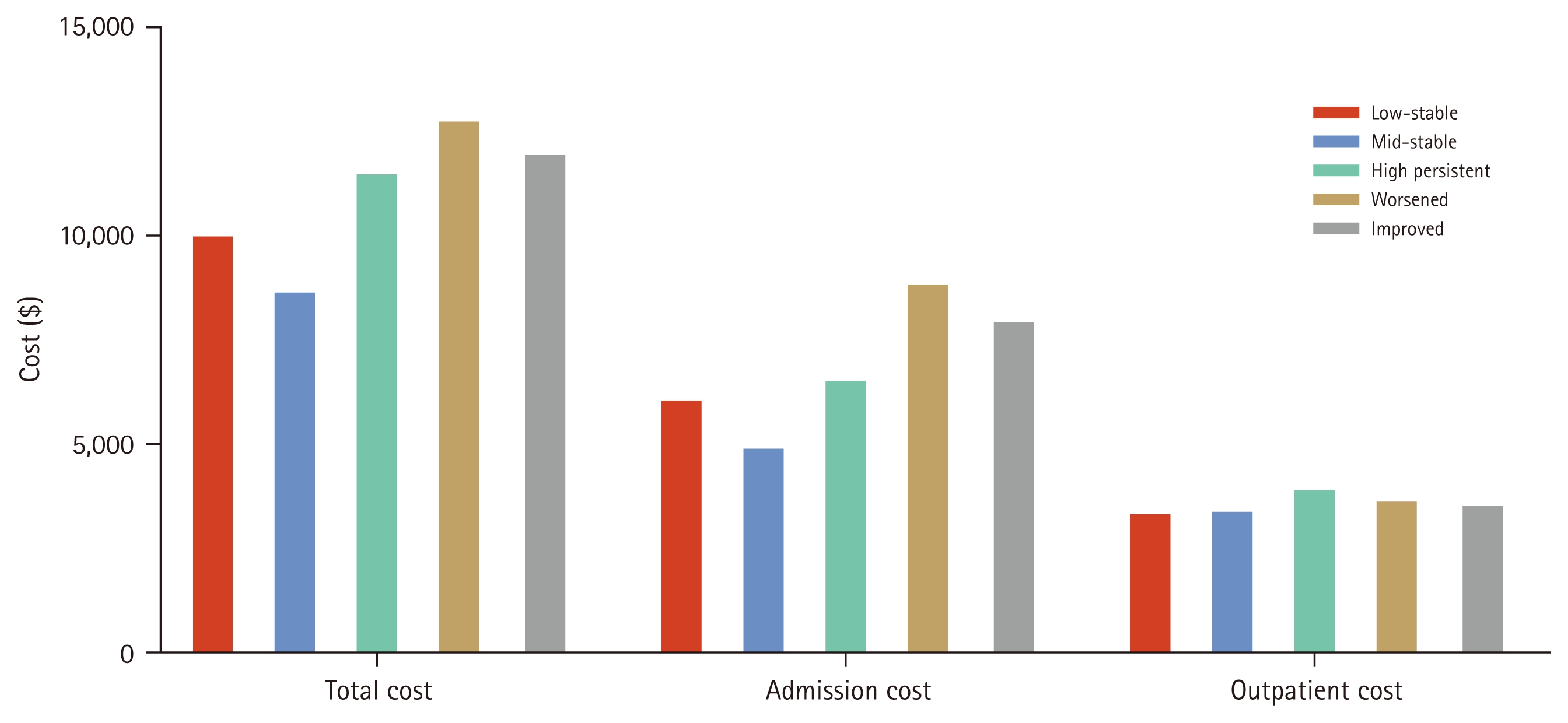
Total healthcare costs were the highest in the worsened group (12,742 USD), followed by the high-persistent group (11,444 USD), whereas the low- and mid-stable groups incurred lower costs (9,971 and 8,680 USD). Inpatient costs showed a similar pattern, with the worsened group exhibiting substantially higher admission-related expenditures than all other groups (8,780 USD). Conversely, outpatient costs were the highest in the high-persistent group (3,861 USD). The improved group consistently showed lower total and inpatient costs than the worsened group. Outpatient costs in the improved group were 3,525 USD (Fig. 6).
DISCUSSION
This study evaluated the association between glycemic status and healthcare costs in South Korea using a large single-center dataset of 86,417 individuals over 5 years. Higher HbA1c levels were consistently associated with greater healthcare expenditures, particularly total and inpatient costs. Using unadjusted analyses, each 1% increase in HbA1c level was associated with an additional 236.11 USD in total healthcare costs, with similar associations found in inpatient, outpatient, OOP, and IEs. In multivariate models accounting for major clinical and insurance-related factors, higher HbA1c remained significantly associated with increased outpatient and OOP expenditures, whereas total and inpatient costs were largely attributable to comorbidities such as CKD, cancer, and SDE status. Sensitivity analyses using gamma loglink GLMs showed consistent patterns, with higher HbA1c levels being associated with greater outpatient utilization and patient-borne costs. Together, these findings suggest that poor glycemic control is linked with a higher ambulatory care burden and greater financial exposure of patients, underscoring the economic relevance of sustained glycemic management in routine clinical practice. Further multicenter or population-based studies are warranted to clarify causal pathways and quantify potential cost reductions associated with improved glycemic control.
Furthermore, subgroup analysis highlighted the disproportionate financial burden borne by patients with DM, CKD, and SDE, particularly among those in the highly hyperglycemic group. Importantly, patients with worsening glycemic control incurred higher total and inpatient costs than did those who maintained or improved their glycemic control. These results underscore the critical importance of glycemic management for mitigating the economic burden of diabetes and highlight the potential cost-saving benefits of improving glycemic control in South Korean healthcare settings.
The study also showed that total healthcare costs significantly increased with increasing HbA1c levels. The 75th percentile total cost reached 9,339 USD in the HG group (HbA1c ≥ 8%) compared with 7,673 and 8,741 USD in the NG and MG groups, respectively; for every 1% increase in HbA1c, total cost rose by 236.11 USD. Similarly, Boye et al. [12] reported significantly higher costs for an HbA1c level of ≥ 7% in the US, with an annual total cost of 16,460 USD versus 13,704 USD for an HbA1c level of < 7%. Although absolute costs in our study were lower than those in the US due to differences in healthcare systems, the positive relationship between costs and poorer glycemic control was consistent. Furthermore, Oh et al. [8], using Korean NHI data, reported annual direct medical costs of approximately 2,941 USD in patients with diabetes, which is consistent with our findings. Kim et al. [21] estimated the annual per capita costs for diabetes to be 1,939 USD in a prospective Korean cohort study, with higher costs among those with complications. When adjusted for inflation, these results were compared with ours and reaffirmed the significant economic burden posed by diabetes. In a Spanish population-based study performed by Mata-Cases et al. [22], a direct relationship was found between worsening glycemic control and increased healthcare costs; annual healthcare costs were 23% higher in patients with poor glycemic control (HbA1c 8–10%) than in those with good glycemic control (HbA1c < 7%). This finding was primarily attributed to higher hospitalization rates and costs, which aligns with our finding of elevated inpatient costs in the HG group. The additional costs likely stem from the need for intensive blood glucose management, including insulin titration and prolonged hospital stays [23]. Collectively, these findings emphasize the importance of targeted interventions to improve HbA1c levels, which could significantly reduce the societal financial burden on systems such as the NHI. Importantly, our subgroup analyses of data of patients with diabetes, CKD, or SDE demonstrated that even within these high-risk populations, higher HbA1c levels were consistently associated with greater healthcare costs. These findings suggest that the observed relationship between poor glycemic control and increased financial burden persists even after accounting for major comorbid conditions. These results should be interpreted as describing the structure of associations between glycemic control and healthcare costs rather than as identifying specific utilization-level cost drivers.
In our study, medical aid beneficiaries had significantly higher total healthcare costs than did the other insurance groups. One possible reason is that the prevalence of severe illnesses such as CKD (35.9%), SDE status (30.3%), and cancer (7.2%) was higher in this group. In previous studies, the presence of chronic disease was significantly associated with greater outpatient and inpatient service use [24,25]. These serious and chronic conditions require more frequent and intensive medical care, thereby increasing healthcare expenses [26].
Another factor may be the low OOP costs for medical aid recipients, which could lead to a higher use of healthcare services. With fewer financial barriers, both necessary treatments and potentially avoidable services may contribute to cost increases. For instance, in a Korean study that focused on patients with end-stage renal disease, the OOP costs for patients with NHI were 2.6 to 3 times higher than those for medical aid patients, despite no difference in healthcare utilization rates [27], suggesting that patients receiving medical aid must manage their severe illnesses and effectively access medical services. In addition, a recent study has found an association between low income and unhealthy habits, resulting in multimorbidity [28]. To address this, policies should focus on improving care for severe conditions and ensuring the efficient use of resources.
Our study demonstrated that elevated HbA1c levels and worsening glycemic control over time were associated with higher healthcare costs. Notably, the Worsened group incurred the highest expenses, indicating that “failure to achieve blood glucose control” may lead to a greater financial burden. However, given that this analysis was based on a descriptive secondary assessment within a cross-sectional design, causality or long-term temporal effects cannot be inferred. Nevertheless, these patterns raise the possibility that enhanced HbA1c management might be associated with lower hospitalization rates and related costs. No previous study has directly analyzed the relationship between changes in HbA1c levels over time and healthcare costs. However, a meta-analysis reported that greater HbA1c variability was associated with an increased risk of macrovascular and microvascular complications and mortality in patients with diabetes [29]. Moreover, several studies have demonstrated that higher diabetes-related costs are significantly associated with increased cardiovascular events and mortality over 10 years, further emphasizing the importance of glycemic control in terms of reducing clinical and financial burdens [9,30]. These previous findings and our results suggest that stabilizing HbA1c levels is crucial for preventing complications and reducing associated healthcare costs. In this context, the introduction of medications with cardiovascular and renal benefits, such as SGLT2 inhibitors and GLP-1 receptor agonists, which reduce hospitalization and complication-associated costs, appears economically justified [31].
However, this study has some limitations. First, it employed a retrospective, cross-sectional, real-world design, which precluded causal inferences about the relationship between HbA1c levels and healthcare costs. Accordingly, no washout period or restriction on incident cases was applied. Although this limits causal interpretation, it enhances the generalizability of our findings to routine clinical practice. Second, the study was conducted using data from a single institution, Uijeongbu St. Mary’s Hospital, which also functions as a regional trauma center. This institutional characteristic might have influenced the patient case mix and healthcare utilization patterns, thereby limiting the generalizability of the findings to other settings. Moreover, because cost data were restricted to services provided within this institution, healthcare utilization at other facilities, particularly for diabetes-related complications, was not captured, likely leading to an underestimation of total healthcare costs. Third, discordance between HbA1c levels and diabetes diagnostic codes was observed, reflecting an inherent limitation of operational definitions in real-world administrative data [32]. Patients with well-controlled diabetes may exhibit HbA1c levels < 6.5% despite being diagnosed with diabetes, whereas some individuals with elevated HbA1c levels may not receive a diabetes code during non-endocrine hospitalizations owing to under-coding. To minimize misclassification bias, HbA1c was analyzed primarily as a continuous biological marker. In addition, the NG group in this study should not be interpreted as a healthy control population, as it included individuals undergoing HbA1c testing for diverse clinical indications. Although this heterogeneity might introduce residual confounding factors, subgroup and multivariate analyses were performed to mitigate this limitation. Fourth, although the study period spanned 5 years and included the COVID-19 pandemic, individual COVID-19 infection or hospitalization status could not be identified due to data anonymization. Nevertheless, annual cost trends were assessed; moreover, the overall association between HbA1c levels and healthcare expenditures remained consistent across the years, supporting the robustness of the findings. Finally, only direct medical costs were analyzed, and detailed cost components, such as emergency department visits, intensive care unit admissions, specialty-specific services, and diabetes-related complications, could not be separately evaluated owing to the use of aggregated cost variables. In addition, hypoglycemic events could not be reliably captured, despite previous studies showing that severe hypoglycemia is associated with increased medical costs [33]. A more granular assessment of cost drivers requires prospective or nationwide datasets with richer clinical and healthcare utilization data. Further multicenter or population-based studies are warranted to clarify the causal pathways and quantify the potential cost reductions associated with improved glycemic control. Collectively, these limitations indicate that the present findings should be interpreted as characterizing real-world associations between glycemic status and healthcare costs rather than causal effects, whereas they provide clinically relevant insights into the economic burden associated with poor glycemic control in routine real-world practice.
This study demonstrated that high HbA1c levels and worsening glycemic control were significantly associated with increased healthcare costs, particularly inpatient expenses. Patients with stable or improved glycemic control incurred lower costs, underscoring the importance of glycemic stability for reducing financial burden. Notably, each 1% increase in the HbA1c level was associated with an average cost rise of 236 USD, providing a practical benchmark for evaluating the economic value of glycemic control interventions.
KEY MESSAGE
1. Higher HbA1c levels were consistently associated with increased healthcare costs, particularly total and inpatient expenditures.
2. Each 1% increase in HbA1c was associated an average rise of approximately USD 236 in total healthcare costs.
3. Poor and worsening glycemic control were associated with a greater ambulatory care burden and higher OOP expenses.


 PDF Links
 PubReader
 ePub Link
 XML Download
 Full text via DOI
 Download Citation
 Supplement table 1
 Print
Print